
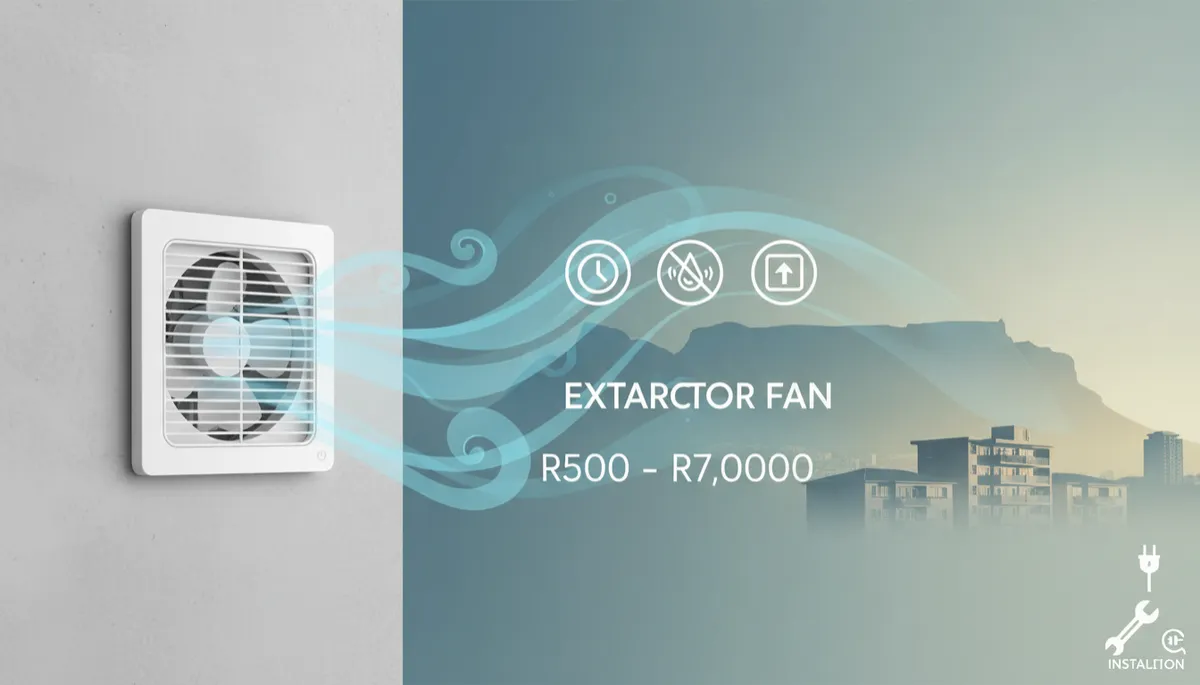
Bathroom Fan Installation Cost Guide Cape Town 2026
Home Improvement, Bathroom Ventilation Cape Town
Bathroom Extractor Fan Installation Cost in Cape Town (2026 Guide)
Planning a bathroom extractor fan installation in Cape Town? This 2026 guide explains why ventilation matters, how fans work, what features to look for, and what you can realistically expect to pay for a professional install in the Mother City.
Why proper bathroom ventilation matters in older Cape Town apartments
Many older Cape Town apartments were built long before modern ventilation standards. Small internal bathrooms, painted-over steel windows and sealed-up vents mean steam has nowhere to go. Over time this leads to condensation, mould, peeling paint and swollen doors, as well as musty odours that are almost impossible to shift with a window alone – if you even have one. Good bathroom ventilation Cape Town-wide is not just about comfort; it protects your finishes, your health and, in sectional title blocks, the fabric of the building itself.
💡 Pro Tip: If you regularly see condensation on tiles and mirrors 30 minutes after a shower, your bathroom ventilation is inadequate.
How bathroom extractor fans work
A bathroom extractor fan is a small electric fan that draws moist air out of the room and expels it outside through a duct. As the stale, humid air is removed, fresh air is pulled in under the door or through a vent, reducing condensation and helping the room dry quickly. Fans can be:
Wall-mounted: Installed directly through an exterior wall, ideal for older apartments with accessible outside walls.
Ceiling-mounted with ducting: The fan sits in the ceiling and vents through the roof or an external wall via a duct.
Inline duct fans: The fan motor is hidden in the ceiling void, pulling air from a grille in the bathroom and pushing it outside.
Whichever style you choose, the principle is the same: continuous, reliable extraction of moist air to protect your bathroom and adjacent rooms.
What to look for in a bathroom extractor fan
Choosing the right unit is just as important as the installation. When comparing options for bathroom extractor fan installation Cape Town projects, pay attention to:
Extract rate (airflow): Measured in m³/h, this tells you how much air the fan can move. Small cloakroom WCs can use lower extract rates, but steamy family bathrooms typically need a higher-capacity fan to keep up with daily showers. Undersized fans are a common cause of ongoing condensation problems.
Noise level: Quieter fans encourage regular use. Look for low decibel ratings if your bathroom is close to bedrooms or living areas, especially in compact flats.
Timer overrun: A built-in timer keeps the fan running for a set period after the light is switched off, ensuring all the steam is cleared without you having to remember to turn it off later.
Humidity sensor: Ideal for busy households, these fans automatically switch on when moisture levels rise and switch off once the air is dry. Expect to pay roughly R500–R1,000 extra for this feature according to Cape Town installers such as Abacas Solution and national data from Kandua.
IP rating: Bathrooms are wet zones, so the fan must be rated for use near water. Your installer will match the fan’s IP rating to its position relative to the shower or bath, in line with South African safety standards and the National Building Regulations.
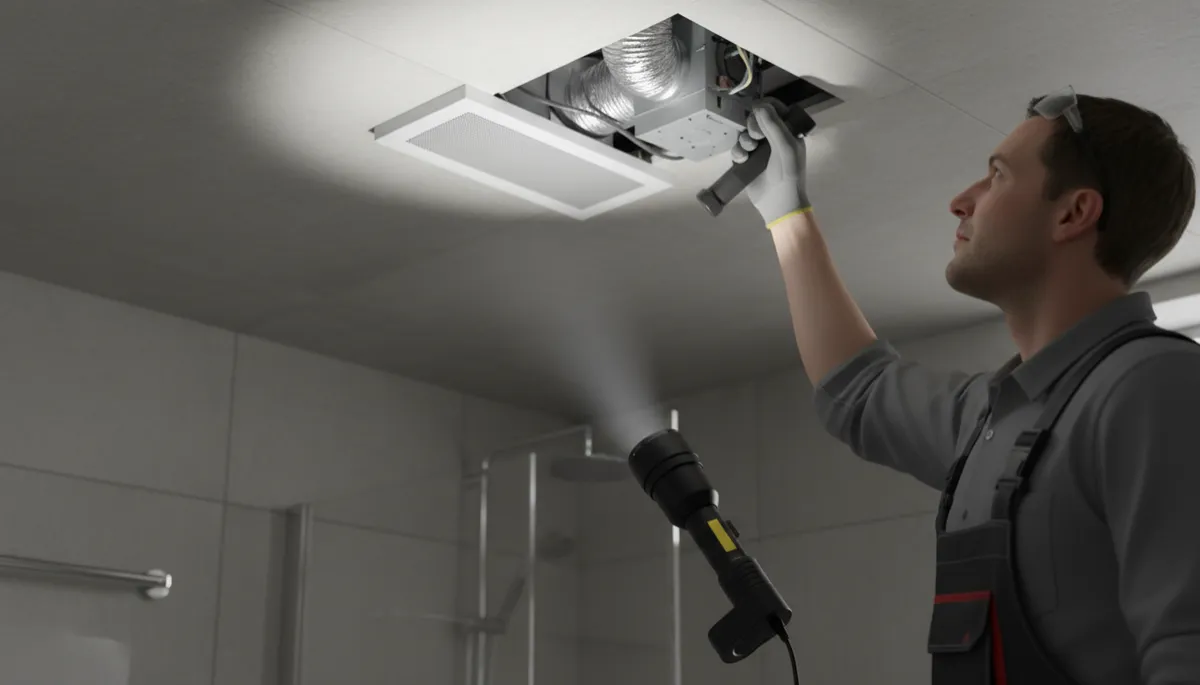
A proper survey of ducting and fan size is vital before any new installation.
Bathroom extractor fan installation cost in Cape Town (2026)
Based on 2026 pricing from Cape Town installers and national cost guides (including Abacas Solution and Kandua), you can expect the extractor fan cost Cape Town homeowners face to fall roughly within the following brackets:
Basic like-for-like replacement: From around R500–R1,500 for labour only when an existing fan, wiring and ducting are already in place and simply need swapping to a similar unit. This is the lower end of the R500–R7,000 range and suits straightforward upgrades in smaller flats.
Standard supply and install: For a wall- or ceiling-mounted fan with a short duct run, including the unit, wiring and vent, most Cape Town residents pay in the region of R1,500–R3,000, in line with Abacas’s typical pricing and Future Light’s 2026 estimates.
Mid-range systems with timer or humidity sensor: Once you add quieter performance and smart controls, total costs usually land between R2,500–R4,000, depending on the brand and complexity of wiring.
Premium or inline ducted installations: For high-end, ultra-quiet inline fans or long duct runs through concrete or multiple bends, budget around R4,000–R7,000. This covers the fan (often R2,800–R4,000+), new ducting and more involved labour.
Western Cape labour rates tend to sit 10–20% higher than national averages, which is reflected in these figures. Always ask for a clear quote that separates the fan price, labour, and any extras like ducting or sensors.
Special considerations for apartment buildings in Cape Town
In sectional title schemes and older blocks, bathroom extractor fan installation is rarely as simple as drilling a hole and plugging in a fan. You may need:
Body corporate approval: Any work that alters common property – such as drilling through external walls, adding external grilles or running new ducts in shared roof voids – usually requires written consent from the body corporate or managing agent. This avoids disputes and ensures compliance with the building’s rules and the City of Cape Town’s by-laws.
Solid concrete walls and slabs: Many Cape Town apartments have reinforced concrete walls and ceilings. Creating a new vent may require core drilling, which is noisy, time-consuming and must be done carefully to avoid services and structural elements. This is one of the main reasons some installations push towards the upper end of the R7,000 range.
📌 Key Takeaway: Always factor in body corporate approval and potential core drilling when budgeting for bathroom ventilation in a flat.
Common bathroom extractor fan mistakes to avoid
Even with a good fan, poor installation can undo all the benefits. Some of the most frequent mistakes seen in bathroom ventilation Cape Town projects include:
Venting into the roof void: Discharging moist air into a ceiling or roof space instead of outdoors can cause hidden mould, timber rot and insulation damage. Regulations require that extractors vent safely to the outside, not into enclosed voids where moisture and residues can build up and create fire risks.
Undersized fans: Choosing a fan designed for a tiny WC and expecting it to cope with a family bathroom rarely works. The result is persistent condensation and disappointed owners who think “fans don’t work”.
Poorly designed duct runs: Long, crushed or sharply bent ducts dramatically reduce airflow. In older buildings, it is vital to plan the route properly and use rigid or semi-rigid ducting where possible.
Ignoring maintenance: Dust and lint can clog grilles and ducts over time. Simple cleaning keeps performance up and helps you stay on the right side of fire-safety expectations in local regulations.
How Fixr helps: from like-for-like swaps to core drilling
Fixr offers a complete, hassle-free service for bathroom extractor fan installation Cape Town residents can rely on. Whether you are refreshing a tired old fan or installing ventilation for the first time in a steamy en-suite, Fixr can assist with:
Like-for-like replacements: Swapping out existing fans for modern, quieter and more efficient models, making use of your current wiring and ducting where appropriate to keep costs down.
New wiring and controls: Adding separate fan switches, integrating timers or humidity sensors, and ensuring all electrical work complies with South African standards and your certificate of compliance requirements.
Core drilling and new duct routes: Creating clean, correctly sized openings through concrete walls or slabs and installing suitable ducting and external grilles, particularly important in older apartments with no existing vents.
Crucially, Fixr places strong emphasis on checking that any existing ducting is functional before installation. That means confirming the duct is continuous, correctly terminated outdoors, free of major kinks and properly sealed. There is little point fitting a premium fan to a blocked or poorly routed duct – you will pay more without getting the performance you expect.
💡 Pro Tip: Ask your installer to photograph the duct route and external termination so you know your fan is venting correctly.
Planning your next steps
When budgeting for an extractor fan cost Cape Town homeowners should allow for both the fan and the labour, and remember that complexity – not just the size of the bathroom – drives the final price. Start by confirming whether you are replacing an existing fan or starting from scratch, check if body corporate approval is needed, and decide which features (timer, humidity sensor, low noise) matter most to you. With a clear brief and a professional installer like Fixr, you can transform a damp, steamy bathroom into a dry, fresh space that protects your home for years to come.

Serving Atlantic Seaboard, CBD & surrounds
fixr.capetown • Whatsapp: 084 668 3307