
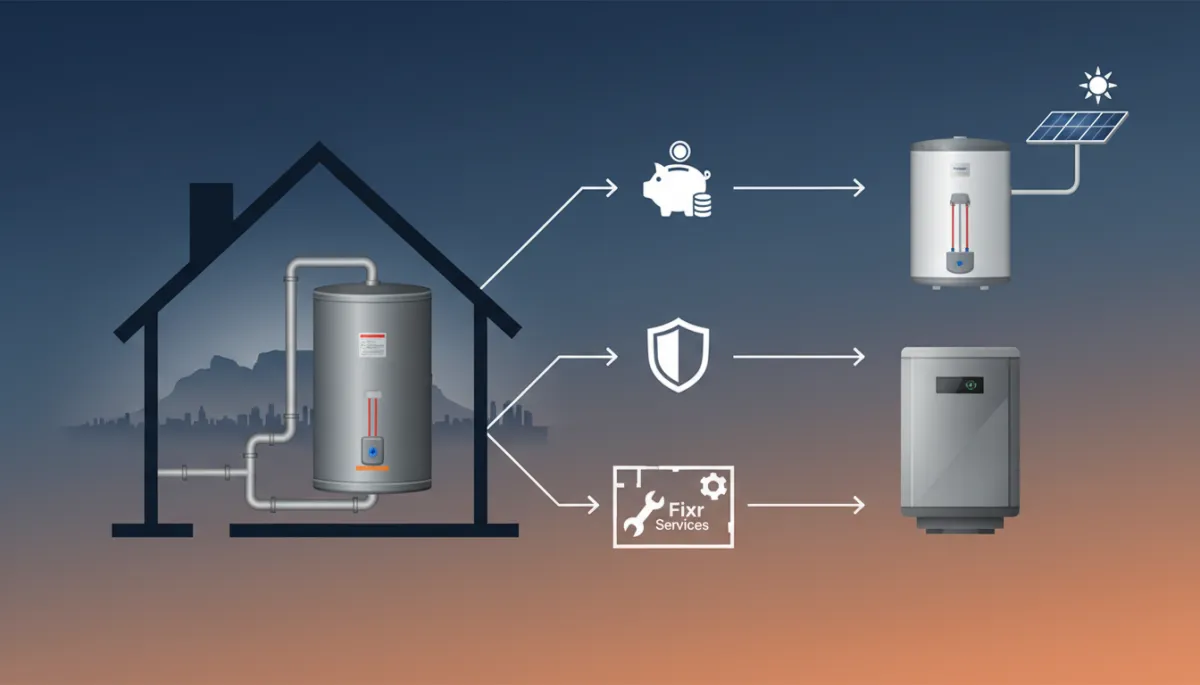
Geyser Replacement Cost Guide 2026
Home Improvement, Geyser Replacement, Cape Town
Geyser Replacement Cost in Cape Town (2026 Guide)
Planning a geyser replacement in Cape Town in 2026 requires more than a quick price check. You need to understand when replacement makes financial sense, how different geyser technologies compare, what a realistic budget looks like, how insurance will respond, and what a professional installer such as Fixr actually handles on your behalf. This comprehensive guide brings those elements together so you can make a confident, well-informed decision for your home or apartment.
1. When to Replace Rather Than Repair Your Geyser
Not every geyser fault means you need a new unit. However, there are clear situations where replacement is more cost‑effective, safer, and better aligned with insurance and compliance requirements in Cape Town. Consider prioritising replacement in the following scenarios.
Age and condition of the geyser
Most standard electric storage geysers in South Africa have a typical life expectancy of around 8–12 years for enamel-lined tanks and 15–20+ years for stainless steel units. If your geyser is older than 8–10 years and experiencing repeated issues, replacing it is usually more economical than paying for a series of short‑term repairs that do not address underlying corrosion or tank fatigue.
Burst tank or significant corrosion
A burst geyser or visible tank corrosion is almost always a replacement case. Once the cylinder itself is compromised, repairs are not reliable or compliant with SANS 10254 standards. In Cape Town, total replacement costs in a burst scenario, including a compliant geyser, labour, safety components and both plumbing and electrical Certificates of Compliance (CoCs), typically range from R5,500 to R12,000 in 2026, depending on size and specification (clickndone.co.za).
Repeated element, thermostat or valve failures
Single component failures such as an element, thermostat, or pressure valve can often be repaired cost‑effectively. However, if you are calling a plumber more than once a year for different geyser components, it is a warning sign that the system is nearing end of life. When cumulative repair bills approach 30–40% of a new installation cost, replacement becomes the more sensible long‑term option, particularly if you are considering an energy‑efficient upgrade such as a solar or heat‑pump system.
Non‑compliant or outdated installation
Many older Cape Town properties still have geysers installed without drip trays, correctly sized overflow pipes, vacuum breakers, or isolator switches within sight. If your installation is not SANS‑compliant, your insurer may refuse or limit future claims. In these cases, a like‑for‑like replacement that brings the system up to standard, complete with updated components and CoCs, is often the safest route and improves the long‑term insurability of your property.
Escalating running costs and load‑shedding concerns
Even if your existing electric geyser is technically functional, you may choose to replace it for efficiency and resilience reasons. Cape Town households facing high electricity bills or frequent load shedding increasingly opt to replace older electric units with solar or heat‑pump solutions that reduce consumption by 50–75% and improve hot‑water availability during power disruptions (energybee.co.za).
📌 Key Takeaway: Replace rather than repair when the tank is compromised, the unit is older than 8–10 years with recurring issues, the installation is non‑compliant, or when you want to capture long‑term savings from a more efficient technology.
2. Types of Geysers Available in Cape Town (2026 Overview)
Cape Town homeowners can choose from several geyser technologies, each with different upfront costs, running expenses, and installation requirements. Understanding these options is essential before committing to a replacement, especially if you are considering an insurance‑funded like‑for‑like swap versus a planned energy‑efficient upgrade.
Standard electric storage geysers
Electric storage geysers remain the most common choice in Cape Town. These units store hot water in an insulated tank (typically 50–300 litres, with 150 L and 200 L most popular) and use one or two electric elements to maintain temperature (plumbingafrica.co.za). They are relatively affordable to purchase and easy to replace on a like‑for‑like basis, which is why insurers often default to them in burst geyser claims.
Tank materials: Enamel‑lined steel tanks (with sacrificial anodes that need periodic replacement) versus more expensive stainless‑steel tanks that can last 15–20+ years with minimal maintenance (energybee.co.za).
Pressure systems: High‑pressure systems are standard on municipal supply and require pressure valves, vacuum breakers and drip trays. Low‑pressure units are used with gravity‑fed header tanks in some older or rural properties.
Instant gas geysers (tankless)
Gas geysers heat water on demand using LPG or piped natural gas, without storing hot water in a tank. They are attractive for households wanting to reduce electricity usage and maintain hot water during load shedding. Monthly running costs can be 40–50% lower than traditional electric geysers in Cape Town, depending on gas prices and usage patterns (homepulse.co.za).
Installation must be performed by a registered gas installer, and a Gas Certificate of Compliance is legally required. Adequate ventilation, correct flue routing, and safe cylinder storage are non‑negotiable, particularly in apartments and compact urban properties.
Solar geysers (solar thermal systems)
Solar geysers use roof‑mounted collectors to harness the sun’s energy to heat water. In Cape Town’s sunny climate, they can reduce electricity consumption for water heating by 20–70%, with typical payback periods of 3–5 years (energybee.co.za). They are particularly attractive for free‑standing homes with suitable roof space and orientation.
Direct (thermosiphon) systems: Water circulates naturally through the collectors and tank. These systems are simple and cost‑effective but more exposed to freezing conditions, which can be a consideration in certain Cape Town suburbs.
Indirect (pumped) systems: Use a heat‑transfer fluid and heat exchanger, offering better frost protection and more flexibility in tank placement, often making them suitable for complex roofs or aesthetic considerations.
Collector options include flat‑plate panels and evacuated tubes, with the latter offering higher efficiency in cooler or overcast conditions (City of Cape Town Water Heating FAQs).
Heat pump water heaters
Heat pumps extract ambient heat from the surrounding air and transfer it into the water, operating on a principle similar to an air‑conditioner in reverse. They can reduce electricity consumption for water heating by around 60–75% compared with standard electric geysers (energybee.co.za). Many models sold in South Africa are designed for coastal environments such as Cape Town and can be paired with existing storage tanks or new cylinders.
Heat pumps require outdoor space with adequate airflow and generate some operational noise, which must be considered in dense townhouse complexes and apartments. While upfront costs are higher, the long‑term energy savings and reduced strain during load shedding are significant.
Point‑of‑use water heaters
Point‑of‑use heaters are compact electric or gas units installed close to a specific tap, shower or basin. They are often used in offices, granny flats, or bathrooms far from the main geyser to reduce heat loss and waiting time. While generally not a whole‑house solution, they can be a useful part of a broader hot‑water strategy, especially in renovations or where pipe runs are long.
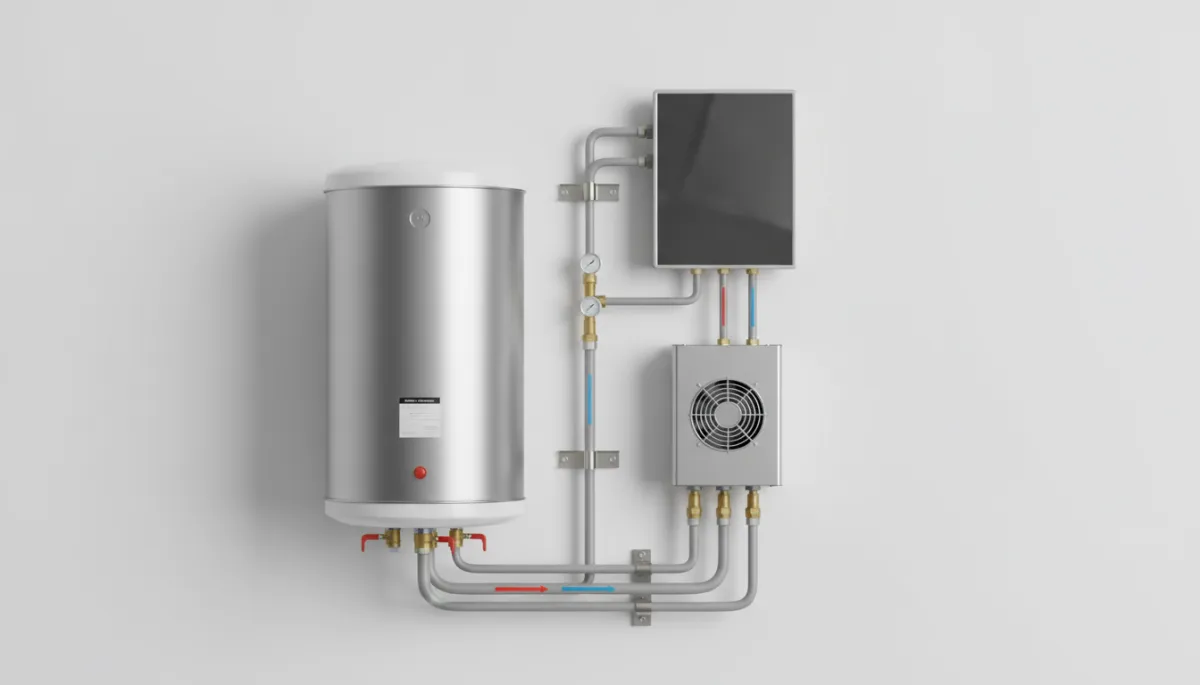
Choosing between electric, solar and heat‑pump systems affects both upfront cost and long‑term savings.
3. Geyser Replacement Costs in Cape Town (2026)
Replacement costs vary according to geyser size, technology, accessibility and compliance requirements. The figures below reflect realistic 2026 estimates for the Cape Town area, based on multiple reputable sources and typical all‑inclusive pricing that covers the unit, labour, safety components and CoCs where applicable (abacassolution.co.za; fonster.co.za; plumberonduty.co.za).
Standard electric geyser replacement costs
For a typical like‑for‑like electric geyser replacement in Cape Town’s CBD and surrounding suburbs, including removal of the old unit, new SANS‑compliant geyser, valves, drip tray, and plumbing and electrical CoCs, you can expect:
150 L electric geyser (fully installed): approximately R6,500–R10,000, with some providers quoting up to R12,500 for premium brands or more complex installations (abacassolution.co.za; plumberonduty.co.za).
200 L electric geyser (fully installed): broadly in the range of R7,500–R13,000, with some national averages going as high as R15,000 depending on brand and additional work required.
In burst geyser insurance scenarios, line items might include:
200 L electric geyser unit: R3,500–R6,500
Labour: R1,800–R4,500
CoCs (plumbing and electrical): R450–R1,500
Safety accessories (valves, drip tray, insulation): R600–R1,200 (clickndone.co.za).
Heat pump system costs
Heat pumps have a higher upfront cost but offer substantial long‑term savings. National 2026 data indicates that a fully installed domestic heat‑pump water‑heating system can range from R25,000 to R48,000, depending on brand, capacity, and whether a new storage tank is included (plumberonduty.co.za; energybee.co.za). In Cape Town, most homeowners can budget towards the lower to mid‑range of this spectrum for a typical 150–200 L household system, but complex sites or retrofits may push costs higher.
Solar geyser system costs
Complete solar thermal systems, including collectors, a compatible tank (or solar‑ready geyser), circulation components and installation, typically range from the mid‑teens to around R42,000 for residential setups, depending on configuration, collector type and roof complexity (plumberonduty.co.za). Solar‑ready geysers alone (without collectors) in burst insurance scenarios are often priced around R5,500–R10,000 for the cylinder itself (clickndone.co.za).
Key factors that can increase or reduce your final bill
Accessibility: In‑roof or hard‑to‑reach installations, cramped apartment ceilings, or steep roofs can add labour time and scaffolding or safety equipment costs.
Upgrades: Adding timers, insulation blankets, new isolation valves, or changing geyser position can add R500–R2,000+ to a standard replacement in Cape Town (abacassolution.co.za).
Emergency call‑outs: After‑hours or weekend replacements typically attract premium rates, especially during storms or cold snaps when burst geyser claims spike.
💡 Pro Tip: Request an itemised quote that separates unit cost, labour, safety components, and CoCs. This not only helps you compare quotes but also simplifies insurance claims and future maintenance planning.
4. Insurance Considerations for Geyser Replacement in Cape Town
Geyser claims are among the most frequent home insurance events in South Africa. Understanding how your policy treats geyser replacement is crucial before authorising work, especially if you are considering an upgrade beyond a simple like‑for‑like swap.
What insurers typically cover
Major insurers such as Santam and OUTsurance generally cover damage caused by sudden and accidental events, including burst geysers and resultant water damage to ceilings, floors and contents (Santam; OUTsurance). Policies often include:
Replacement of the geyser on a like‑for‑like basis (usually a standard electric unit) up to a specified limit.
Associated labour, safety valves, drip tray and overflow piping, if required to meet current standards.
Repair of water damage to insured structures and, in some cases, affected contents.
Common exclusions and limitations
Insurers typically do not cover normal wear and tear, gradual corrosion, or lack of maintenance. If your geyser fails because the sacrificial anode was never replaced or the installation was non‑compliant, your claim may be reduced or declined (Dialdirect). Policies may also:
Cap the payout to a maximum amount, especially for older properties or budget products.
Require you to pay an excess (deductible) before the insurer covers the remainder of the claim.
Approved service providers and compliance
Many insurers insist that geyser replacements be handled by approved service providers and PIRB‑registered plumbers. Installations must comply with SANS 10254, and both plumbing and electrical CoCs are usually required for the claim to be fully honoured. Using a non‑approved contractor or failing to obtain CoCs can jeopardise cover for future incidents related to that installation.
Upgrades versus like‑for‑like replacements
If you decide to upgrade from a standard electric geyser to a solar or heat‑pump system at the time of a claim, your insurer will usually pay what it would have cost to replace the original electric geyser. You then contribute the difference to cover the upgrade. It is important to clarify this with your insurer before work begins and to obtain a revised, itemised quote that clearly separates the insured portion from the upgrade component.
Practical steps for a smooth claim
Report the incident to your insurer as soon as possible and follow their instructions regarding emergency repairs and preferred contractors.
Take clear photos of the damaged geyser and any resultant water damage before clean‑up, where safe to do so.
Keep all quotes, invoices and CoCs. These documents are essential to substantiate the claim and prove that the new installation is compliant.
📌 Key Takeaway: Your insurer will generally fund a like‑for‑like electric geyser replacement if the failure is sudden and accidental, provided the installation is compliant and done by approved professionals. Upgrades to solar or heat‑pump systems usually require a co‑payment from you.
5. Geyser Location Challenges in Cape Town Apartments
Apartment living in Cape Town introduces specific challenges when it comes to geyser replacement. Limited access, shared services, and strict body corporate rules can all influence both cost and the feasibility of different technologies such as gas, solar, or heat pumps.
In‑ceiling and in‑roof installations
Many Cape Town apartments and townhouses have geysers located in tight ceiling voids above bathrooms or passages. Replacing these units can be labour‑intensive, involving ceiling cut‑outs, working in cramped conditions, and managing building noise restrictions. Installers must also take extra care to ensure that drip trays and overflow pipes are correctly routed to prevent water damage to units below in the event of future leaks or bursts.
Restrictions on gas and external equipment
While gas geysers and heat pumps can be excellent solutions for free‑standing homes, apartment complexes often restrict where gas cylinders, flues and external units can be placed. Balconies may have load or aesthetic restrictions, and body corporate rules may limit visible external equipment on façades or roofs. In some cases, this makes a direct upgrade to gas or solar impractical, and a more efficient electric unit, combined with a timer and insulation, is the most realistic option.
Shared infrastructure and water shut‑offs
In multi‑storey buildings, shutting off water to replace a geyser can affect multiple units. Coordinating with building management, caretakers and neighbours is often necessary, and some complexes require advance notice for planned maintenance. This can influence scheduling and may attract additional charges if work must be done within specific time windows or after hours to minimise disruption.
Structural and weight considerations
Upgrading to a larger tank or adding solar collectors and storage on a shared roof may require structural assessments. Body corporates may insist on engineering sign‑off to ensure that additional weight does not compromise the building. For this reason, many apartment owners stick to the existing geyser size and location, focusing on efficient controls and insulation rather than major system changes.
💡 Pro Tip: Before planning any geyser upgrade in an apartment, review your body corporate rules and consult building management. This prevents costly surprises or having to redo non‑approved work.
6. What Fixr Handles During a Geyser Replacement
Managing a geyser replacement involves more than simply swapping out a tank. A professional service provider such as Fixr coordinates multiple technical, regulatory and practical steps to ensure that your new installation is safe, compliant, and aligned with both your budget and your insurer’s requirements. While specific offerings can vary, a comprehensive geyser replacement service will typically include the following.
Site assessment and technology recommendation
A qualified plumber or assessor will review your current geyser position, household hot‑water demand, roof orientation (for solar), available outdoor space (for heat pumps), and any apartment or body corporate constraints. Based on this assessment, Fixr can advise whether a like‑for‑like electric replacement is appropriate or whether an upgrade to solar, gas (where permitted) or heat pump would be more cost‑effective over the long term.
Detailed, itemised quotation and insurance liaison support
Fixr will typically provide an itemised quote that separates:
Geyser unit cost (electric, solar‑ready, or part of a heat‑pump system)
Labour and call‑out fees
Safety valves, drip trays, brackets, insulation and timers, where applicable
Plumbing and electrical CoCs
This structure makes it easier for you and your insurer to see what portion of the work qualifies as a like‑for‑like replacement and what portion relates to optional upgrades or improvements. In many cases, Fixr can also assist by aligning their quoting format with the information your insurer requires, streamlining the authorisation process.
Removal of the old geyser and installation of the new system
On installation day, Fixr’s team will isolate water and power, safely drain and remove the old geyser, and install the new unit in line with SANS 10254 requirements. This includes:
Correctly sizing and installing pressure control valves, vacuum breakers and safety relief valves.
Fitting a drip tray and overflow piping that discharges visibly and safely, often to the exterior of the building.
Ensuring the electrical connection includes an accessible isolator switch and appropriate circuit protection.
For solar or heat‑pump systems, Fixr will coordinate additional tasks such as mounting collectors or heat‑pump units, routing insulated pipework, installing circulation pumps where necessary, and integrating timers or controllers.
Compliance documentation and handover
Once the installation is complete and tested, Fixr arranges the necessary compliance documentation, which typically includes:
Plumbing CoC from a PIRB‑registered plumber confirming SANS compliance.
Electrical CoC (or supplementary CoC) where the circuit or connection has been altered.
Gas CoC for any gas‑fired equipment installed as part of the solution.
You will also receive guidance on operating settings, timer schedules (where installed), and basic maintenance recommendations to protect your warranty and maintain insurance cover.
Clean‑up, disposal and follow‑up
A professional service will remove and responsibly dispose of the old geyser and any associated debris, leaving the work area tidy. Fixr can also schedule follow‑up checks where necessary, especially for more complex systems such as solar or heat pumps, to confirm that performance and efficiency align with expectations after a few weeks of operation.
📌 Key Takeaway: Fixr manages the full lifecycle of a geyser replacement—from assessment, quoting and insurer alignment through to compliant installation, documentation and clean‑up—reducing the administrative and technical burden on you as the homeowner.
7. Planning Your Geyser Replacement: Practical Next Steps
To approach your geyser replacement in Cape Town strategically, rather than reactively, consider the following steps:
Review your current system: Note the geyser size, age, location, and any recurring issues. Photograph the installation for reference when requesting quotes or speaking to your insurer.
Clarify your priorities: Are you primarily concerned with lowest upfront cost, long‑term energy savings, resilience during load shedding, or minimal disruption in an apartment context?
Check your insurance policy: Confirm what is covered, applicable excesses, and whether you must use approved providers. Ask how upgrades are treated if you are considering solar or a heat pump.
Request itemised quotes: Obtain at least one detailed quote—ideally from a provider like Fixr that understands local compliance and insurance requirements—covering standard replacement and any upgrade options you are considering.
Plan the timing: Where possible, schedule non‑emergency replacements during normal working hours to avoid after‑hours premiums and to allow sufficient time for body corporate approvals in apartments.
A well‑planned geyser replacement can significantly reduce long‑term running costs, improve hot‑water reliability, and ensure your installation meets the latest safety and insurance standards. By understanding the costs, technologies, and logistical considerations outlined in this 2026 guide, you are better positioned to choose a solution that suits both your property and your budget.

Serving Atlantic Seaboard, CBD & surrounds
fixr.capetown • Whatsapp: 084 668 3307