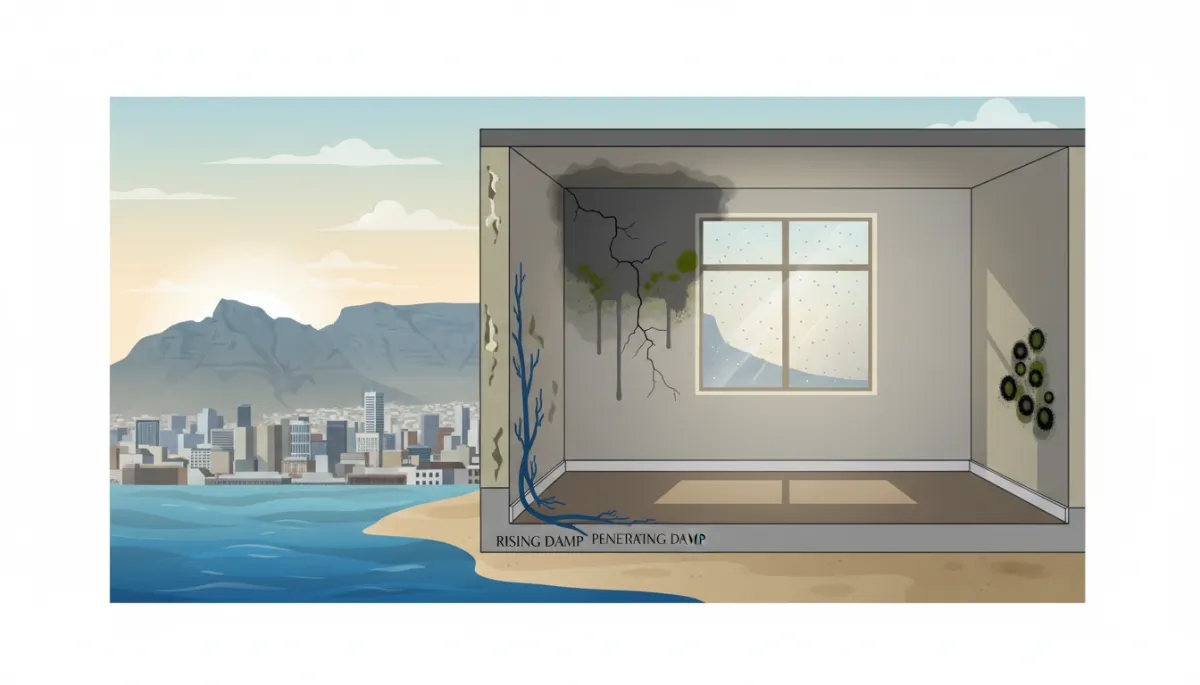
Identify and Fix Damp Issues in Cape Town Homes
Property Care, Damp Cape Town
Damp in Your Cape Town Home? Rising Damp vs a Leak vs Condensation
Damp patches on your walls or ceilings are more than just cosmetic. In a coastal city like Cape Town, misdiagnosing damp can lead to unnecessary expense and repeated problems. This guide explains the three main causes of damp — rising damp, penetrating damp and condensation — how to tell them apart, typical damp proofing cost Cape Town homeowners can expect, and why a proper diagnosis matters before you commit to invasive repairs.
Why Damp Is So Common in Cape Town Homes
Damp Cape Town problems are driven by a mix of climate, construction age and local conditions. The city’s Mediterranean climate brings heavy winter rainfall, often driven horizontally by strong winds that force water into small cracks and weaknesses in external walls. Coastal suburbs such as Sea Point, Muizenberg and Blouberg face additional salt-laden air and persistent moisture, which accelerate the breakdown of plaster, paint and mortar joints.
Many older Cape Town properties were built before modern damp proof course standards were widely enforced, or their original barriers have deteriorated over time. Extensions and alterations may have bridged existing protection. Combine all of this with periods of poor ventilation in winter, and you have the perfect recipe for rising damp, penetrating damp and condensation all appearing in the same house — sometimes even in the same room.
Rising Damp: Moisture Travelling Up from the Ground
Rising damp occurs when moisture from the ground is drawn up through porous brickwork and mortar by capillary action. A properly installed damp proof course (DPC) — a waterproof barrier usually set just above ground level — is designed to stop this. In many rising damp Cape Town cases, the original DPC is missing, damaged, or bridged by raised paving, plaster or soil built up against the wall.
Typical signs include tidal marks or staining up to about one metre above floor level, flaking skirting boards, blistering paint and white, powdery salts on the surface. The wall often feels cold and damp low down, but drier higher up. Unlike a leak, the pattern is usually fairly even along a section of wall rather than concentrated around one point.
💡 Pro Tip: Before assuming rising damp, check that outside ground levels are at least 150 mm below the internal floor and that flowerbeds or paving are not covering the original DPC line.
In terms of damp proofing cost Cape Town homeowners can expect, targeted rising damp treatment typically ranges from around R120–R250 per square metre for chemical injection and replastering, with more complex chemical DPC injection sometimes charged per linear metre (roughly R450–R900/m in some Northern Suburbs). Full-property solutions, where large sections of the house are affected, can run into tens of thousands of rand, so confirming that the problem really is rising damp is essential before you authorise major work.
Penetrating Damp: Water Coming Through the Building Envelope
Penetrating damp (sometimes called lateral damp) is caused by water getting through the external fabric of your home. In Cape Town, this is common on weather-facing walls, parapets and flat roofs that take the brunt of winter storms. Typical causes include cracked plaster, degraded paint, failed flashings, blocked or leaking gutters and poorly sealed window or door frames.
You will usually see irregular damp patches that grow and shrink with the weather, sometimes accompanied by mould, peeling paint or crumbling plaster. Unlike rising damp, patches can appear higher up a wall or on ceilings, often aligned with an external defect such as a balcony, parapet or downpipe. If the damp worsens after heavy rain and improves in dry, windy spells, penetrating damp is a strong candidate.
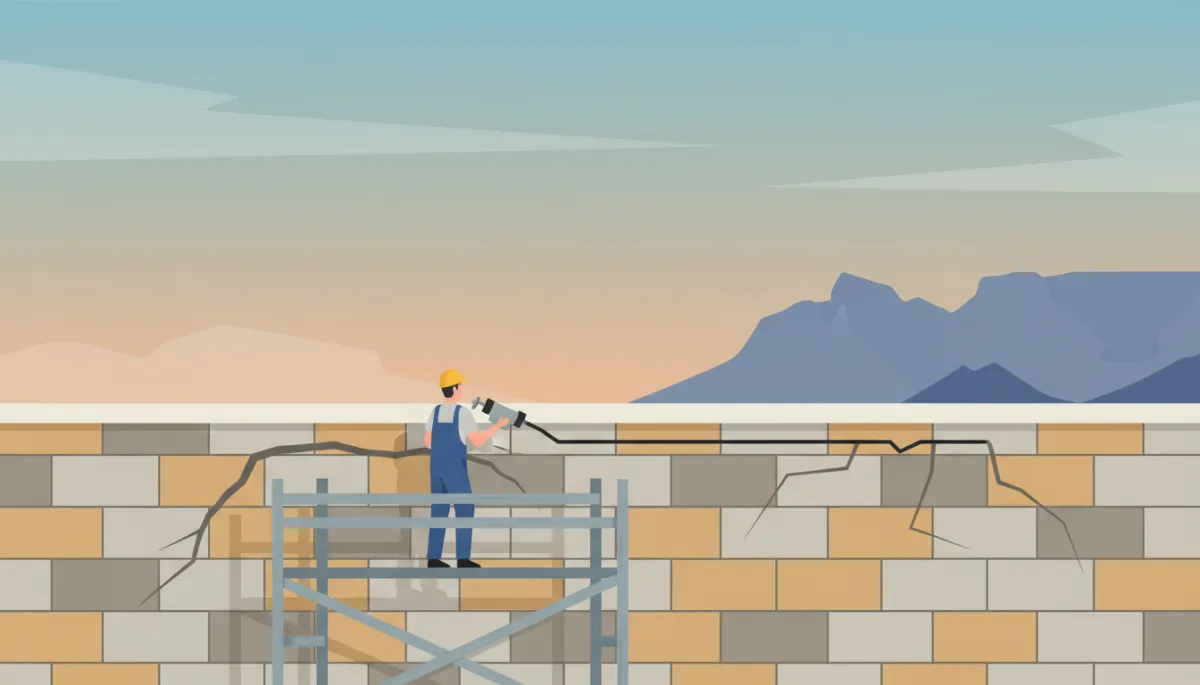
Repairing external cracks and failed coatings is often cheaper than full internal damp treatment.
Penetrating damp treatment costs vary widely depending on access and the nature of the defect. As a guide, external waterproofing and crack repairs in Cape Town can range from about R80–R150 per square metre for basic coatings, up to R150–R650 per square metre for more specialised systems, membranes or tanking on problem areas. Because the cost is driven by the specific defect, a thorough inspection of gutters, roofs, parapets and wall finishes should always come before any talk of expensive internal replastering.
Condensation: When Humid Air Meets Cold Surfaces
Condensation is the most easily overlooked form of damp, yet it is extremely common in Cape Town’s cooler, wetter months. Warm, moisture-laden air from cooking, showering or drying clothes indoors meets cold walls and windows, and the water vapour condenses into droplets. Over time, this can lead to black mould spots, particularly in corners, behind furniture, in bathrooms and on south-facing walls that get little sun.
Understanding condensation vs damp from structural sources is crucial. Condensation usually appears as surface moisture and mould rather than deep, salty, crumbling plaster. It is often worse in the morning, improves quickly with heating and ventilation, and may be more noticeable in rooms with closed windows, blocked vents or no extraction fans. Treating condensation with expensive damp proofing will not solve the underlying ventilation issue and can be a costly mistake.
The good news is that condensation control is usually the cheapest to address: improving airflow, using extractor fans, slightly heating cold rooms and rearranging furniture away from external walls can make a big difference. Only in persistent cases might you consider mechanical ventilation systems or thermal lining, which are still typically far less expensive than full rising or penetrating damp treatments.
Why Proper Diagnosis Matters Before You Spend
Because symptoms often overlap, misdiagnosis is common. For example, a cold external wall with condensation mould might be mistaken for penetrating damp, or a low-level leak from a shower could be confused with rising damp. Given that full damp proofing in Cape Town can range from R120 per square metre to project totals of R20,000–R70,000 or more, guessing is not an option.
📌 Key Takeaway: Always confirm whether you are dealing with rising damp, penetrating damp or condensation before agreeing to invasive work such as stripping plaster or installing a new damp proof course.
The Fixr Approach: Check Cheap Causes First
At Fixr, we start every damp Cape Town assessment with simple, low-cost checks before recommending specialist treatment. This includes looking for leaking gutters or downpipes, blocked drains, cracked tiles, failed sealant around showers and baths, and external ground levels that may be bridging an existing DPC. We also consider lifestyle and ventilation patterns to rule out condensation as the primary culprit.
Only once these inexpensive possibilities have been eliminated do we move on to more advanced diagnosis, such as moisture readings, salt analysis and detailed inspection of the building envelope. Where rising damp Cape Town issues are confirmed, we may recommend chemical injection to create a new damp proof course, followed by salt-resistant replastering. For penetrating damp, the focus is on targeted repairs to the source of water ingress, combined with appropriate internal restoration where necessary.
Noticed Damp? Get Fast, Professional Advice
Whether you are dealing with bubbling paint in a coastal flat, mouldy corners in a bathroom, or suspicious low-level staining that could indicate rising damp, early action will save you money and protect your property value. The key is to distinguish accurately between rising damp, penetrating damp and condensation before you spend on treatments that may not be necessary.
If you have any concerns about damp in your Cape Town home, contact Fixr via WhatsApp for a quick, professional response. Share photos and a brief description of the problem, and we will guide you through the first checks and advise on the most sensible next steps before you commit to any invasive or expensive damp proofing work.
