
Electric Fence Repair in Cape Town: Costs & Tips
Electric Fencing, Home Security, Cape Town
Electric Fence Repair in Cape Town: Common Faults, Costs & What to Check First
A healthy electric fence is one of the most effective crime deterrents for Cape Town homes and businesses. When it starts beeping, arcing or dropping voltage, though, it can be hard to know whether you need a quick tidy-up or a full repair – and what it might cost. This guide walks you through how electric fences work, common faults, what to check yourself, typical repair prices, and when to call Fixr for professional help and compliance.
How an Electric Fence System Works
An electric fence is more than just a few wires on your boundary wall. A typical Cape Town system includes:
An energiser that converts mains (or battery) power into high-voltage pulses, usually 7 000–10 000 V at very low current for safety.
Multiple live wires on brackets along your walls or palisade, carrying those pulses around the perimeter.
An earth system (earth stakes and cabling) that completes the circuit when someone touches the fence, ensuring a strong, controlled shock.
A monitoring and alarm circuit that watches the fence loop for shorts, cuts and tampering, and triggers a siren or security response if something is wrong.
When everything is in balance – good voltage, solid earthing and clean wiring – you get a reliable shock and instant alarm on any interference. Most problems arise when one part of that chain is weakened by weather, coastal corrosion or physical damage.
Common Electric Fence Faults in Cape Town
Vegetation contact: Coastal rain and wind quickly push creepers, shrubs and long grass into the wires. Each contact bleeds voltage away and can trigger constant beeping or “short” alarms. Regular trimming is essential, especially in winter rainfall areas.
Corroded connections: Sea air in Cape Town is tough on metal. Joiners, lugs and terminals corrode, increasing resistance and dropping voltage, particularly on older galvanised systems near the coast.
Broken or slack wires: Storms, falling branches, pets or attempted intrusions can snap or stretch strands. This can either kill the shock completely or cause intermittent faults that are tricky to trace without proper testers.
Failed energisers or batteries: Power surges, lightning and load-shedding stress energisers and backup batteries. Symptoms include dead displays, very low voltage, or an alarm that will not reset. Repairs typically range from about R500–R2 500, while full replacement can be R1 500–R5 000+ depending on brand and size.
Earth stake issues: Poor or corroded earth stakes mean the fence pulses but the shock is weak. In sandy or very dry ground, extra or upgraded earth spikes are often needed, typically in the region of R300–R600 for basic work and up to R1 600 for larger upgrades.
Alarm and keypad faults: Worn keypads, damaged sirens, faulty gate contacts or panel wiring can cause nuisance alarms or no alarm at all. Repairs might sit between R400 and R900 for contacts and controllers, plus call-out.
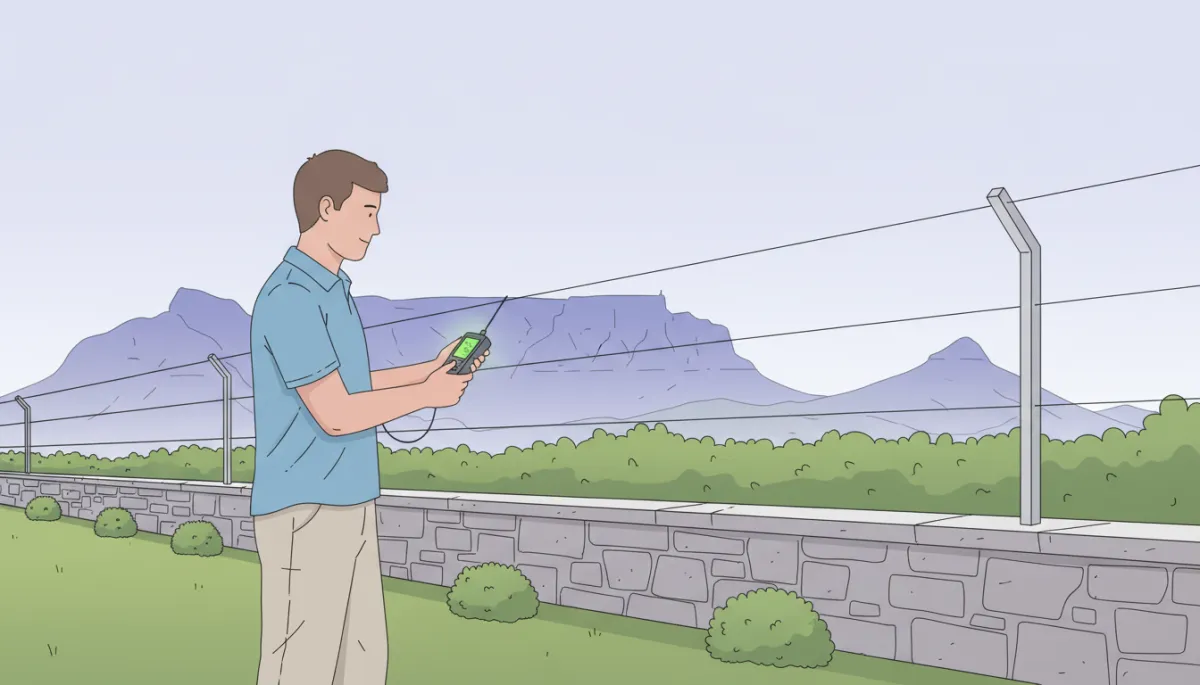
Proper testing quickly separates simple vegetation faults from deeper wiring or energiser issues.
What to Check Before Calling a Professional
You do not need to be an electrician to do a few basic checks. These simple steps can save you money on call-outs – and help Fixr diagnose faster when you do need us.
Energiser display and lights: Is the unit powered on? Are there error codes or flashing LEDs? Note anything unusual, such as “low volts” or “short”, and whether the alarm is constantly active or only when the fence is armed.
Fence perimeter walk‑around: Safely walk the boundary with the fence disarmed if possible. Look for obvious breaks, wires touching metal gates, leaning poles, loose brackets or heavy vegetation resting on the strands.
Voltage testing: If you own a proper fence voltmeter, take readings at a few points and near the furthest corners. Anything much below about 5 000 V under normal conditions suggests a problem. If you do not have a tester, simply note whether the fence “ticks” audibly along the line.
Rain and moisture effects: Does the fault only appear when it rains or when the garden is wet? Moisture can turn small cracks in insulators or minor vegetation contact into full shorts. Telling your technician that the problem is weather‑dependent is a valuable clue.
💡 Safety note: Never grab live wires to “test” the fence. Use proper tools, keep ladders stable and switch off the energiser before clearing vegetation close to the strands.
Typical Electric Fence Repair Costs in Cape Town
Actual prices depend on your property size, access and the make of your system, but recent Cape Town data gives useful ballparks:
Fault diagnosis and call‑out: Expect around R350–R900 for professional fault‑finding, depending on time of day and urgency. Some providers offset this if repairs exceed a certain amount.
Wire repair and tensioning: Small breaks or slack strands can cost roughly R200–R400 per strand, with wire replacement often R150–R400 per metre including labour. Tensioning work typically adds R250–R500 plus modest materials.
Energiser repair or replacement: Board repairs and component swaps usually fall between R500 and R2 500. If the unit is old or badly damaged, full replacement – including installation – can run from about R1 500 up to R5 000 or more for high‑end models, with batteries often R800–R1 800.
Earth stake and grounding work: Adding or upgrading earth stakes and cabling is often in the R300–R600 range for minor work, rising towards R1 600 for more extensive earthing on larger or problematic sites.
Connection servicing and corrosion treatment: Replacing insulators (around R15–R45 each), brackets (R80–R150) and cleaning or re‑terminating joints is usually bundled into a maintenance visit, often keeping the total under about R1 200 on a typical home if no major hardware is needed.
Alarm and keypad repairs: Sorting out faulty gate contacts, sirens or keypads tends to fall between R400 and R900 for parts, plus standard labour and call‑out.
As a rule of thumb, many minor faults can be resolved for under R1 000, while major energiser or wiring replacements can reach several thousand rand. Always ask for an itemised quote that separates labour, parts and any compliance work.
Electric Fence Certificates of Compliance & Property Sales
In South Africa, electric fence installations are regulated, and most property sales now require a valid electric fence Certificate of Compliance (COC). This confirms that the system meets the relevant safety standards and has been tested correctly – including earthing, voltage and signage.
For a typical Cape Town home, inspection and issuing of a COC usually costs between about R500 and R1 000, rising to R2 000 or more on large or complex sites. If the fence fails inspection, repairs must be completed and then the system re‑tested before a certificate is issued. This is particularly important when transferring ownership: conveyancers will normally insist on a current electric fence COC as part of the sale conditions.
How Fixr Helps with Repairs, Compliance and WhatsApp Assessments
Fixr handles fault diagnosis and electric fence repairs across Cape Town, from simple vegetation‑related shorts to full energiser replacements and earthing upgrades. Our technicians are experienced with coastal corrosion, tricky access and mixed‑age systems often found on older properties.
When it comes to compliance, we work hand‑in‑hand with registered, accredited electric fence installers for any COC‑related work. That means you get practical repairs plus the legal paperwork you need for insurance and property transfers, without juggling multiple contractors yourself.
To make things even easier, you can message Fixr via WhatsApp for an initial assessment. Send a brief description of the fault, photos of your energiser and any obvious damage, and we can usually give you a ballpark estimate, advise what to check next, and schedule a site visit if needed.
📌 Next step: If your fence is beeping, the voltage feels weak, or you are preparing to sell your property, reach out to Fixr on WhatsApp today. A quick chat and a few photos are often enough for us to guide you towards the right repair or COC inspection – before small issues become serious security gaps.
