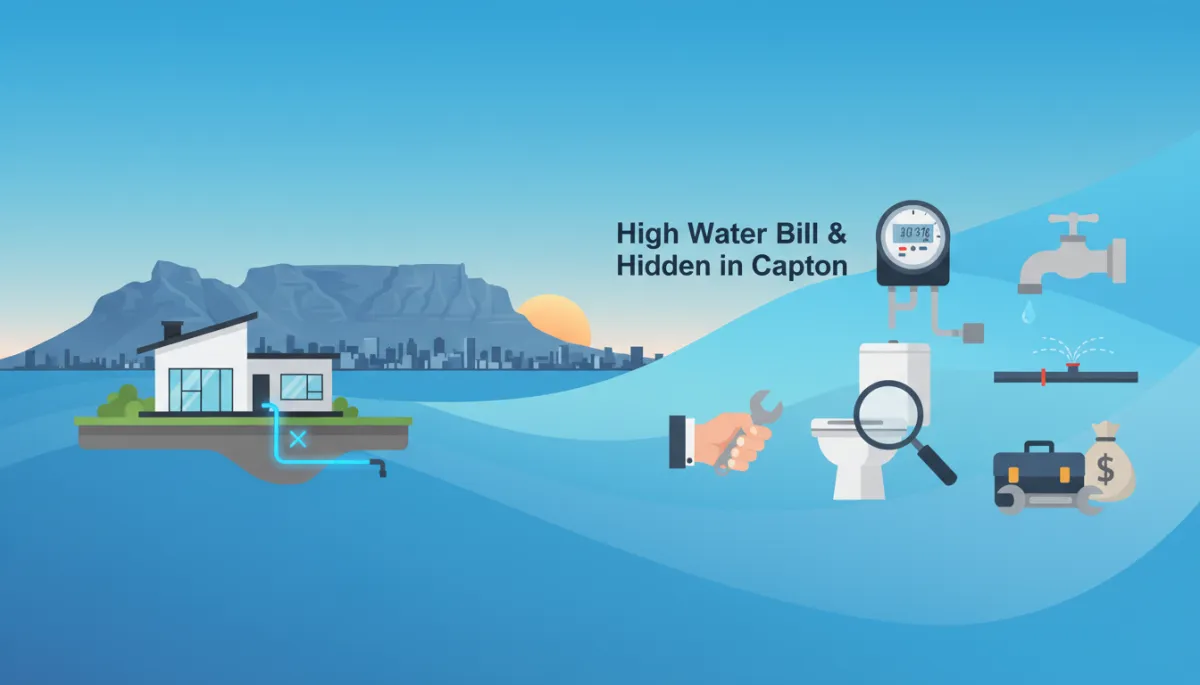
Find Hidden Water Leaks in Cape Town 2026
Home Maintenance, Water Leaks
High Water Bill in Cape Town? How to Find a Hidden Leak in 2026
If you have received a surprisingly high water bill in Cape Town in 2026, you are not alone. Tariffs rose by about 4.5% in July, but a sudden spike usually points to a hidden water leak Cape Town homeowners cannot see easily. This guide explains practical steps to diagnose leaks yourself, when to call a professional, and what water leak detection Cape Town typically costs.
Step 1: Confirm Your High Water Bill Really Signals a Leak
Before assuming the worst, compare your latest bill with previous months. Factor in the July 2026 tariff increase and any changes in occupancy or irrigation. Use the City’s online rates and tariffs calculator to estimate what you should be paying. If your usage in kilolitres is far higher than normal, a high water bill Cape Town scenario is likely being driven by a leak rather than by pricing alone.
Step 2: Do the Water Meter Test (The Essential 2026 Check)
The water meter test is the quickest way to confirm a hidden leak on your property:
Turn off all taps, appliances, irrigation, and water-using equipment inside and outside the home.
Locate your meter (usually in a box on the pavement or boundary wall) and wipe the dial clean so you can read it clearly.
Note the current reading and watch the small flow indicator (often a star or triangle). If it is moving while everything is off, water is flowing somewhere it should not.
Leave all water off for 30–60 minutes, then check the reading again. Any increase confirms a likely hidden water leak Cape Town residents must address promptly.
💡 Professional tip: Take photos of the meter before and after the test. These can support a query with the City if you later request a bill review.
Step 3: Check for Underground Supply Pipe Leaks
If the meter shows flow while everything is off, the leak is usually between the meter and your house, or under slabs and garden beds. Walk the route of the main supply line and look for:
Persistently damp or muddy patches, even in dry weather.
Areas of lush green grass in an otherwise dry lawn.
The sound of running water near boundary walls or where pipes enter the building.
Underground leaks often require professional water leak detection Cape Town specialists, who use acoustic equipment, tracer gas, or thermal imaging to pinpoint the break with minimal digging.
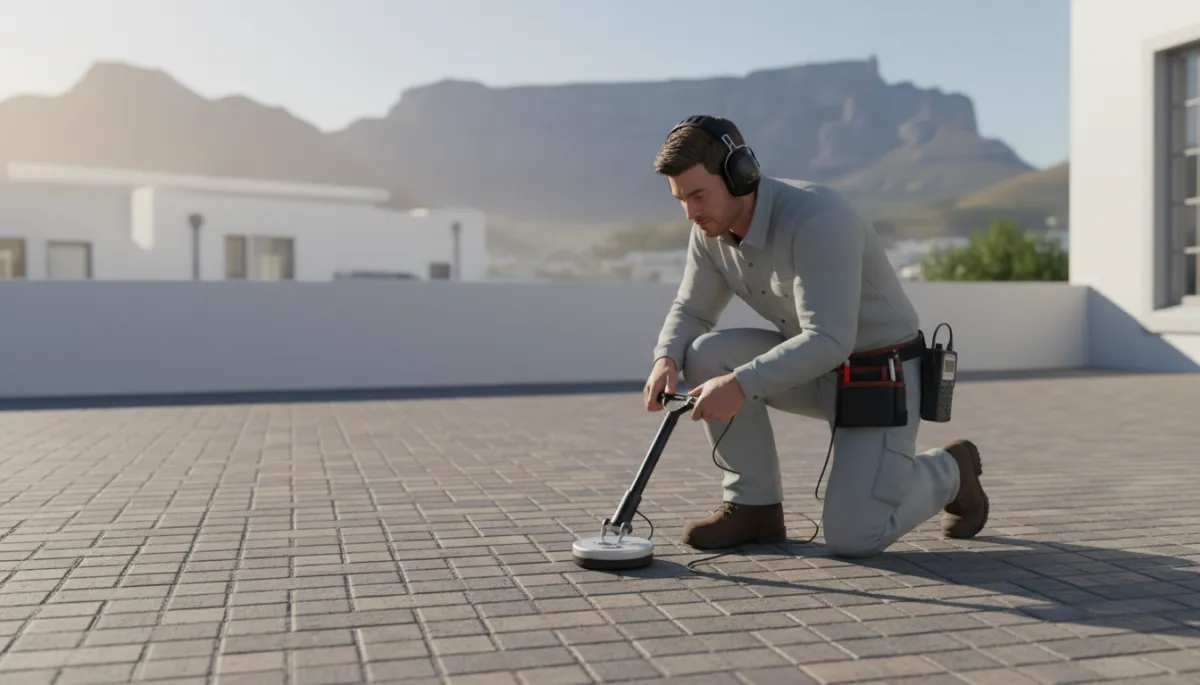
Modern acoustic tools help Cape Town plumbers locate underground leaks without excessive excavation.
Step 4: Inspect Common Leak Points in and Around the Home
Even if the supply line appears sound, smaller leaks at fixtures can still drive a high water bill in Cape Town over time. Systematically check:
Toilets: Listen for hissing in the cistern, add food colouring to the tank, and see if it seeps into the bowl without flushing – a sign of a failed seal or valve.
Taps and mixers: Drips at basins, kitchens, and outside bib taps can waste hundreds of litres a month; check under-sink connections for moisture.
Geysers: Inspect the drip tray, pressure relief valve outlet, and nearby ceilings for damp stains or bubbling paint that could indicate a slow leak.
Irrigation systems: Run each zone briefly and look for broken sprinkler heads, leaking joints, or pipes damaged by roots or garden tools.
Pools and backwash lines: Check that the pool level is not dropping excessively, and ensure the filter’s backwash line is not constantly discharging to waste.
What a Plumber Does for Leak Detection in 2026
When DIY checks do not reveal the source, a qualified plumber brings specialised 2026 technology to your hidden water leak Cape Town problem. Typical methods include:
Acoustic detection to “listen” for leaks through floors, driveways, and walls.
Thermal imaging and infrared to spot cold, damp zones behind finishes.
Pressure testing of specific pipe runs to confirm whether they hold pressure.
Tracer gas and CCTV for complex underground or under-slab leaks, especially on older properties.
Many Cape Town plumbers now also interpret smart meter data, helping you see whether night-time usage suggests a continuous leak.
Typical Leak Detection Costs in Cape Town (2026)
Costs vary by method and complexity, but current guides suggest:
Basic above-ground inspection: around R800–R1,500.
Acoustic or standard residential water leak detection Cape Town: typically R1,200–R2,000.
Full property scans using thermal imaging and pressure testing: about R2,500–R4,500.
Underground or under-slab leak detection with tracer gas and CCTV: R3,500–R6,000 or more.
Call-out fees and after-hours surcharges apply, so whenever possible, book inspections during normal weekday hours and request an itemised quote. Some providers will offset part of the detection fee if you proceed with the repair through them.
Final Thoughts: Act Quickly to Protect Your Home and Wallet
In a water-scarce city, a high water bill Cape Town households cannot explain is more than an irritation – it is a warning sign. By running a simple water meter test, checking underground supply lines, and inspecting toilets, taps, geysers, irrigation systems, and pools, you can often narrow down the problem yourself. When in doubt, engaging a reputable plumber for professional water leak detection Cape Town services is a sound investment that prevents structural damage, conserves water, and brings your bill back under control.
