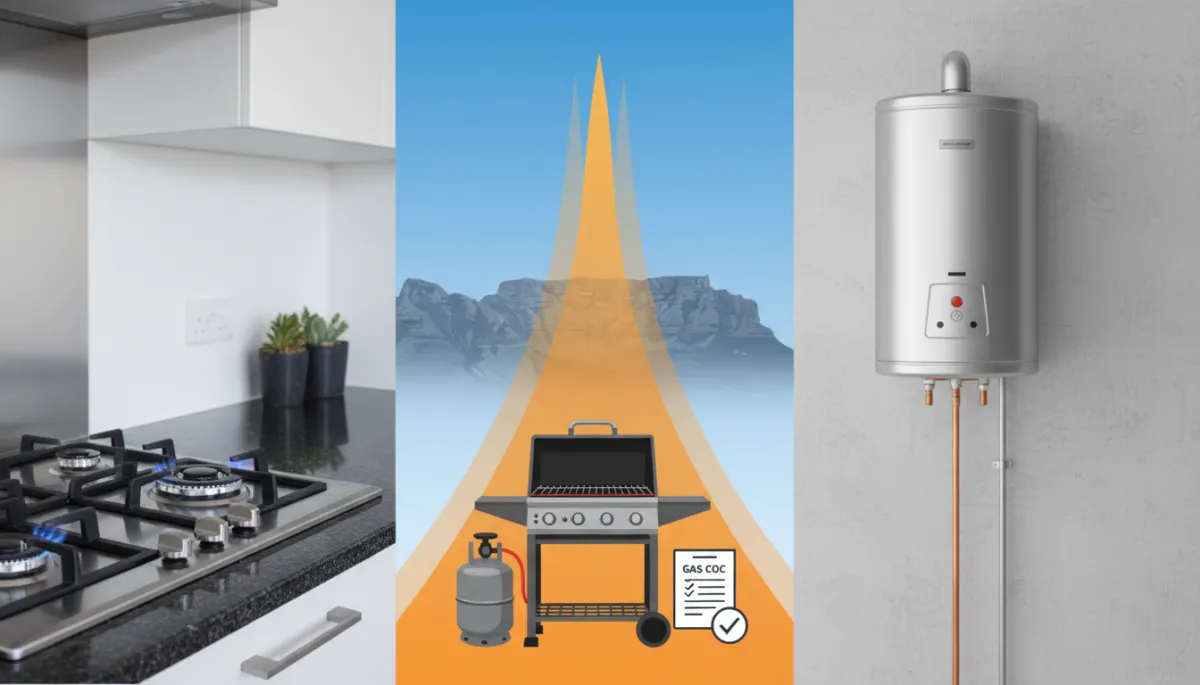
Gas Appliance Installation Cape Town: 2026 Guide
Home Improvement, Gas Appliance Installation Cape Town
Gas Appliance Installation in Cape Town: 2026 Costs, Safety and Compliance
Planning gas appliance installation in Cape Town for 2026 means balancing cost, safety and long‑term running efficiency. From gas hobs and geysers to outdoor braai points and LPG cylinder banks, every fixed installation must comply with South African regulations and be covered by a valid gas COC Cape Town homeowners can rely on for insurance and property transfers.
2026 Cost Snapshot for Common Gas Appliances
By 2026, typical prices for gas appliance installation Cape Town residents can expect remain competitive compared with full‑electric solutions. For gas hob installation Cape Town installers generally charge between R1,500 and R5,000, depending on pipe runs, wall penetrations and whether cylinders are internal or external, with many providers starting from around R1,600 for straightforward jobs (Core Gas Installations; GasProLink).
Gas geyser installation costs vary more widely because of different flow rates and piping requirements. For an all‑in installation, including unit, plumbing, gas line and gas COC, current Cape Town ranges are approximately:
Small 6–8 L/min units: R3,500 – R5,500 installed
Medium 12 L/min units: R5,500 – R8,500 installed
Larger 16–20 L/min and forced‑fan systems: typically R8,000 – R12,000, but complex installs can reach R16,000–R30,000 in demanding situations (EnergyBee; GasProLink).
A gas COC inspection on an existing installation generally costs R500 – R1,200, depending on the number of appliances and any remedial work required (coc-certificate.co.za).
Gas Hobs vs Induction: Which Makes Sense in 2026?
When comparing gas hobs with induction, many Cape Town households still favour gas for its instant flame control, resilience during load‑shedding and compatibility with most cookware. Induction offers faster boiling times, easy cleaning and high efficiency, but relies entirely on a stable electrical supply and often requires electrical upgrades in older properties. In practice, a well‑designed gas hob installation, paired with efficient burners, remains a robust, cost‑effective option for frequent cooks, while induction suits highly insulated, all‑electric homes with reliable backup power.
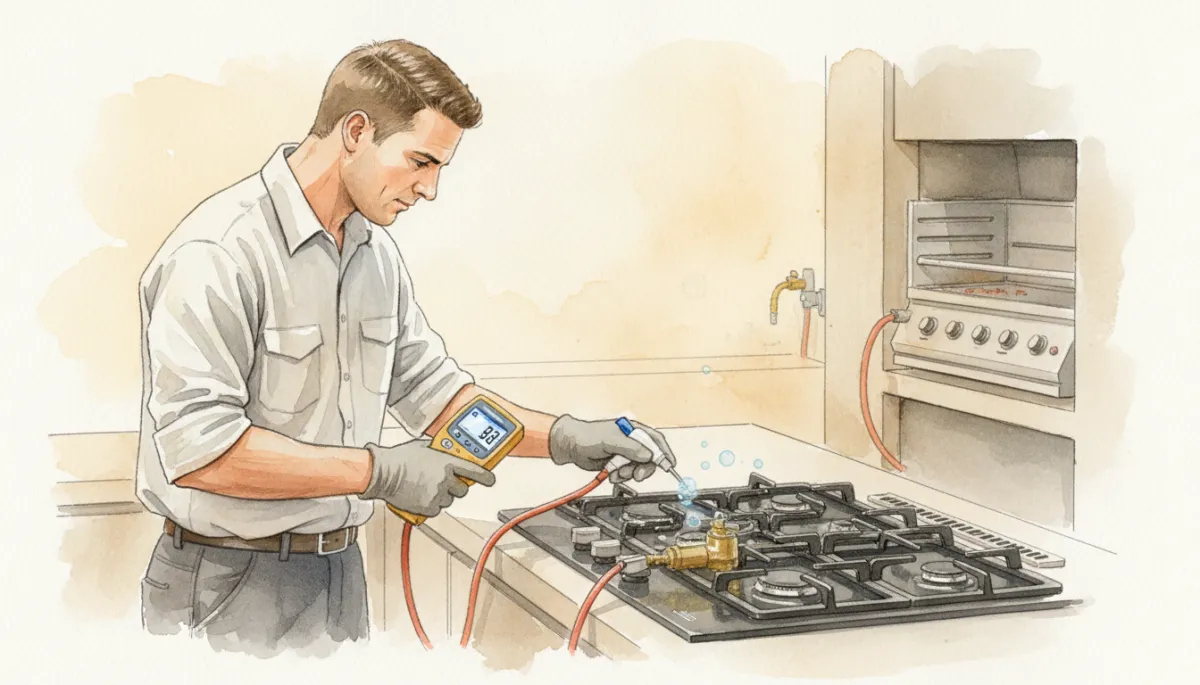
Thorough pressure and leak testing is essential before issuing any gas COC in Cape Town.
Gas Geysers, Outdoor Braai Points and LPG Cylinder Setups
For gas geyser installation, your installer will size the unit to your household’s hot‑water demand, then design safe flueing and pipe routes. Outdoor gas braai points are usually added to the same LPG supply, with copper pipework run to a weather‑protected connection on the patio. This avoids dragging loose cylinders across entertainment areas and keeps the braai permanently ready to use.
LPG cylinder setups are a critical part of any design. Domestic homes typically use one or two 9 kg–48 kg cylinders on a firm, level base outside, with correct clearances from doors, windows, drains and electrical points as required by SANS 10087‑1. Larger banks or anything above 100 kg of LPG may trigger additional municipal approvals and fire safety requirements from the City of Cape Town.
Reticulated Gas vs LPG Cylinders
Most Cape Town homes rely on LPG cylinders, which are delivered, swapped and stored on site. They offer flexibility and relatively low upfront cost, but require periodic refilling and physical storage space. Reticulated gas systems, more common in estates or commercial buildings, use central bulk storage with underground or overhead pipework feeding multiple units. While reticulated gas can be convenient and neat, it demands higher initial investment, more intensive engineering and closer liaison with municipal authorities and fire services.
Gas COC Cape Town: Process, Safety and Registered Installers
South African law requires that all fixed gas installations are carried out by SAQCC‑registered installers. After completing the work, the practitioner must test the system, verify compliance with SANS 10087‑1 and the Pressure Equipment Regulations, and then issue a gas COC. In Cape Town, this certificate is mandatory for insurance cover, and a new COC (no older than three months) is required whenever a property changes ownership (coc-certificate.co.za).
During inspection, the installer will check cylinder location and restraints, regulator type and pressure, pipe materials and supports, appliance clearances, hose lengths, isolation valves, ventilation and flues. Any non‑compliant aspects must be rectified before a gas COC Cape Town insurers and conveyancers will accept can be issued. Never be tempted to bypass this process; unregistered or DIY work can invalidate cover and, more importantly, compromise safety.
Safety precautions to prioritise: keep cylinders upright and outdoors where required, ensure good floor‑level ventilation, install carbon monoxide alarms near indoor gas appliances, and have your system re‑inspected at least every five years or after any modification.
In summary, gas appliance installation in Cape Town in 2026 remains an attractive way to manage energy costs and ride out power interruptions. By budgeting realistically for installation, insisting on a registered installer and a valid gas COC, and understanding the differences between LPG cylinders, reticulated gas and electric alternatives such as induction, you can enjoy efficient, reliable and safe gas throughout your home.
Whatsapp us here or go back to the main site here.
You can also review our Google reviews here: https://share.google/JDod3LE05RFMcRNSV
