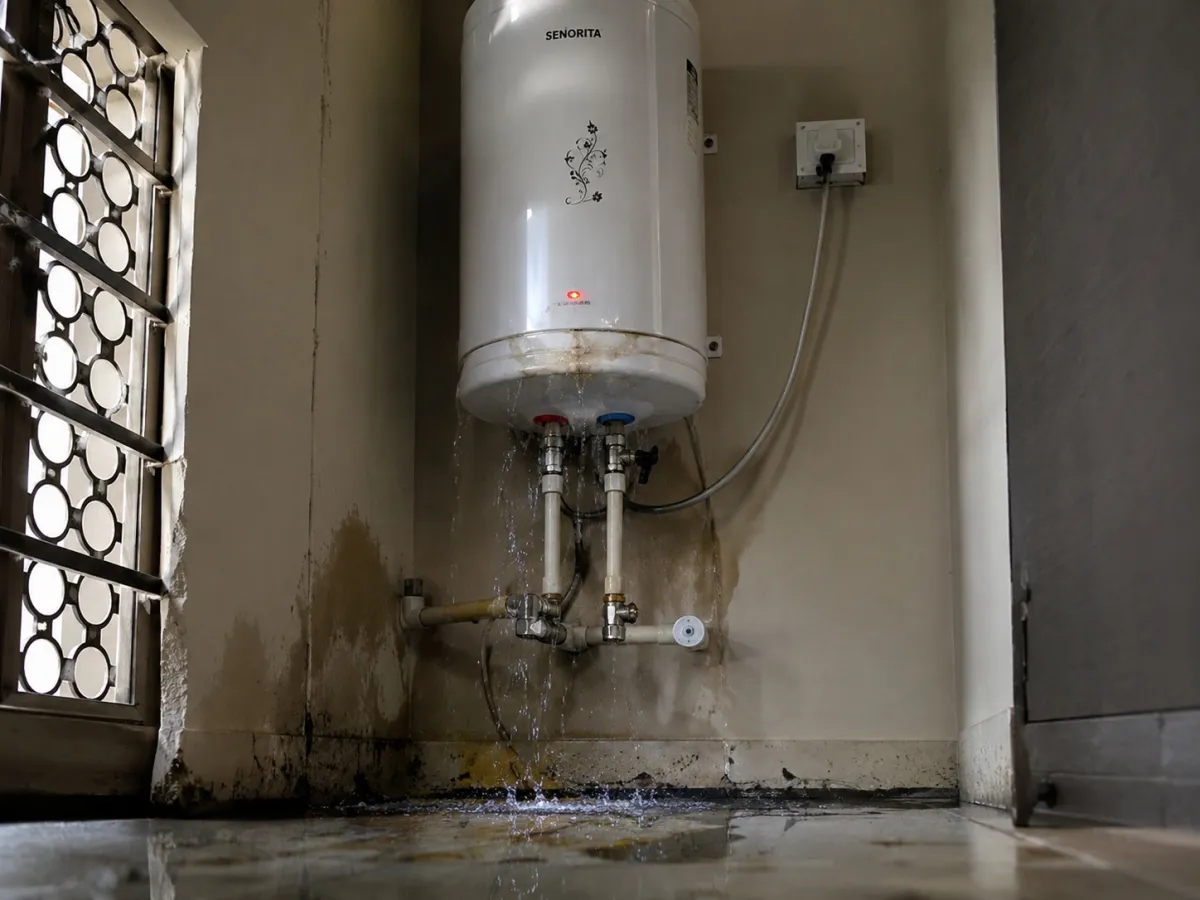
Geyser Leaking or Noisy? Learn What It Means
Home Maintenance, Geyser Leaks, Plumbing Emergencies
Geyser Leaking or Making Noise? Here's What It Means
A leaking or noisy geyser is more than an inconvenience – it can be a sign of developing failure, wasted energy, and potential water damage to your home. Understanding what different warning signs mean, when to repair or replace, and what to do in an emergency can save you money, stress, and unnecessary risk. This guide walks you through the key indicators of trouble, the decisions you may need to make, and how Fixr can support you at every stage.
Why You Should Never Ignore a Leaking or Noisy Geyser
A geyser is one of those appliances you rarely think about – until something goes wrong. Yet it works quietly in the background every day, heating water under pressure and at high temperatures. When it starts leaking or making unusual noises, it is often your first and only early warning that internal components are wearing out or failing. Left unchecked, a faulty geyser can:
Cause significant water damage to ceilings, walls, floors, and electrical fittings
Waste energy and drive up your monthly utility bills due to inefficiency and heat loss
Fail suddenly, leaving you without hot water at the worst possible time
In extreme cases, pose safety risks if pressure and temperature are not properly controlled
💡 Pro Tip: Treat new leaks and unfamiliar noises as urgent warnings, not minor irritations. Early action is almost always cheaper and safer than waiting for a complete failure.
Key Warning Signs of Geyser Failure
Not every drip or sound means your geyser is about to give up, but certain patterns are strong indicators that something is wrong. Recognising them early can help you plan a timely repair or replacement instead of dealing with an emergency.
1. Visible Leaks or Damp Patches
The most obvious sign of trouble is water where it should not be. You might notice:
A steady drip from the geyser casing, pipes, or joints
Damp spots or stains on the ceiling or wall below a ceiling-mounted unit
A small puddle forming around the base of the geyser or on the floor beneath it
Minor leaks may originate from fittings, valves, or corroded connections, which are sometimes repairable. However, if water appears to be seeping from the tank itself, this often indicates internal corrosion and is a strong sign the geyser is nearing the end of its life.
2. Unusual Noises: Banging, Rumbling, or Whistling
While a slight hum is normal when the geyser is heating, loud or persistent noises are not. You might hear:
Banging or knocking – often caused by water hammer or sudden changes in pressure within the pipes
Rumbling or popping – usually due to sediment build-up at the bottom of the tank, causing water to boil through the deposits
Whistling or hissing – which may point to a faulty relief valve or water escaping through a restricted opening
Sediment build-up reduces efficiency and forces the geyser to work harder, shortening its lifespan. Valve issues can directly affect safety by interfering with the system's ability to release pressure correctly.
3. Inconsistent Water Temperature or Pressure
If your showers are swinging from too hot to too cold, or the hot water runs out far faster than it used to, your geyser may be struggling. Common signs include:
Hot water that does not reach the temperature set on the thermostat
Noticeably reduced hot water pressure at taps and showers compared with cold water
Hot water that runs out quickly even with normal household use
These symptoms can be caused by faulty elements, failing thermostats, sediment build-up, or partially blocked pipes. They often start subtly and worsen over time, so it pays to pay attention when you first notice a change.
4. Visible Corrosion, Rust, or Discolouration
Rust on the casing, discoloured fittings, or brownish water coming from hot taps are all red flags. Corrosion weakens the tank and pipework, increasing the risk of leaks or a sudden burst. If rust is present on the outside, it is likely that internal components are also deteriorating, even if you cannot see them.
5. Age of the Geyser and Frequent Call-outs
Most domestic geysers have an expected lifespan in the region of 8–12 years, depending on water quality, installation, and maintenance. If your unit is approaching or beyond this age, and you are calling a plumber more often, it may be signalling that it is nearing the end of its serviceable life. At this point, repeated repairs can become less cost-effective than a planned replacement.
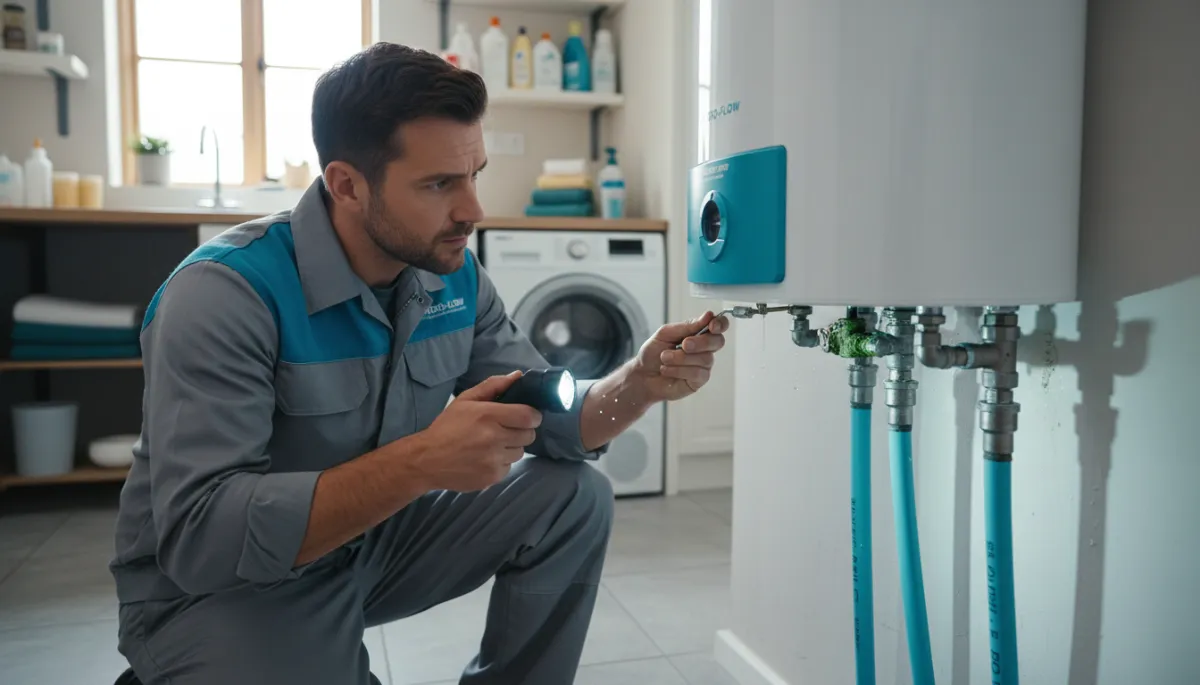
Professional inspection can distinguish minor repairable faults from serious structural tank issues.
Immediate Steps to Take If Your Geyser Is Leaking
Discovering a leak can be stressful, especially if water is already visible on ceilings or floors. Acting quickly can limit damage and keep your household safe while you wait for professional help. Here is what to do, step by step:
Switch off the power supply. For electric geysers, turn off the power at the main distribution board or the dedicated geyser isolator switch. This reduces the risk of electrical hazards and prevents the element from heating an empty or partially drained tank.
Turn off the water supply to the geyser. Locate the shut-off valve on the cold-water inlet pipe leading to the geyser and close it. If you cannot find it or it will not close, you may need to shut off the main water supply to the property as a temporary measure.
Protect your property. Place buckets or containers under active drips, move furniture and valuables away from affected areas, and use towels to absorb standing water. If water is coming through a ceiling, avoid standing directly beneath the bulging area and consider gently piercing a small hole to relieve trapped water, but only if it is safe to do so.
Do not remove safety valves or attempt DIY structural repairs. Tampering with the pressure or temperature relief valve, or opening the casing, can be dangerous. Leave the detailed investigation to a qualified technician, and focus instead on making the area safe and limiting damage.
Contact a professional repair service promptly. When you contact Fixr, you can explain the symptoms, send photos, and receive guidance on whether an emergency call-out is required. The sooner a professional assesses the leak, the better your chances of containing costs and disruption.
⚠️ Safety Reminder: If you smell burning, see sparks, or suspect water has reached electrical fittings, switch off the electricity at the main board immediately and keep people away from the affected area until a professional has inspected it.
Repair or Replace? How to Decide What Makes Sense
Once the immediate risk is under control, the key decision is whether to repair your existing geyser or replace it entirely. There is no one-size-fits-all answer, but several practical factors can guide you towards the most cost-effective and reliable option.
1. Age and Condition of the Geyser
If your geyser is relatively new and has been well maintained, repairing a faulty valve, thermostat, or element can be a sensible choice. However, if the unit is older – typically 8 years or more – and especially if there are signs of corrosion or multiple components have already been replaced, a new geyser often offers better long-term value and reliability.
2. Nature and Location of the Fault
Some issues are clearly localised and repairable, such as:
Dripping relief valves or leaking joints on accessible pipework
Faulty thermostats or heating elements that can be replaced without opening the tank
By contrast, leaks from the tank body, severe corrosion, or extensive internal sediment build-up usually signal that the structural integrity of the geyser has been compromised. In these cases, replacement is typically the safer and more economical route, because repairing the tank itself is rarely viable or guaranteed.
3. Cost Comparison: Short-Term vs Long-Term
A repair may appear cheaper upfront, but it is essential to consider the bigger picture. When deciding, ask:
How much will the repair cost compared with a new geyser and installation?
Is the repair likely to extend the geyser's life meaningfully, or is it a short-term fix on an ageing unit?
Could repeated repairs over the next year or two end up costing more than a planned replacement now?
A common rule of thumb is that if the repair cost is more than 30–40% of the price of a new geyser, and the unit is already mid-life or older, replacement is often more cost-effective.
4. Energy Efficiency and Future Savings
Newer geyser models are generally more energy-efficient and better insulated than older units. If you replace a tired, inefficient geyser with a modern, properly sized one, you may benefit from lower running costs, faster recovery times, and more consistent hot water. Over several years, these savings can offset a significant part of the replacement cost.
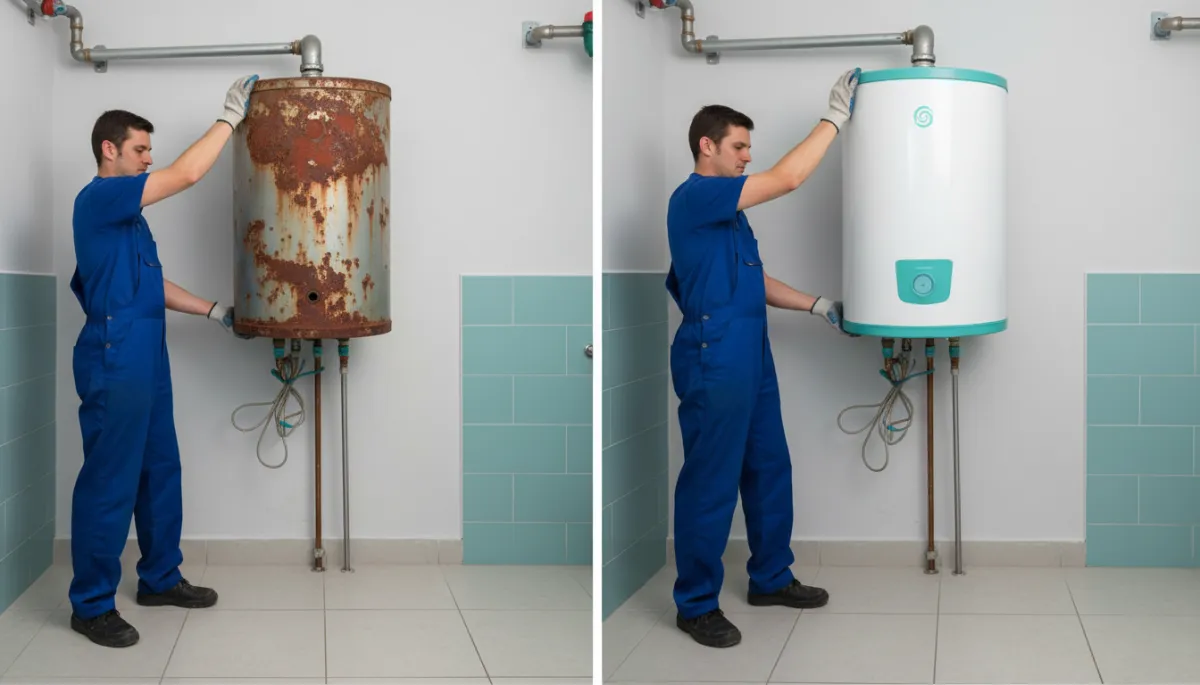
Replacing a failing geyser can improve reliability, safety, and long-term energy efficiency.
Insurance Claim Considerations for Geyser Leaks and Failures
Many home insurance policies provide some level of cover for geyser-related incidents, but the details and limitations vary. Understanding how your policy treats geyser leaks, bursts, and replacements can help you manage costs and avoid unpleasant surprises.
What Is Typically Covered?
While you must check your specific policy wording, insurers often distinguish between:
Damage caused by the geyser – for example, water damage to ceilings, walls, carpets, cupboards, and electrical fixtures. This is frequently covered, subject to excesses and limits, as it is considered consequential damage from an insured event.
The geyser itself – some policies cover the replacement or repair of the geyser, while others treat it as wear-and-tear and may limit or exclude cover for the appliance. There may be a separate geyser benefit or specified maximum amount.
In many cases, labour costs for emergency call-outs and associated plumbing work are also covered to an extent, especially if you use an approved contractor or service partner.
Steps to Take When You Suspect an Insurable Geyser Incident
Limit further damage. As described earlier, switch off the power and water, and protect your belongings as far as is safely possible. Insurers expect you to take reasonable steps to minimise loss.
Document the situation. Take clear photos or short videos of the leak, the geyser, and any visible damage to surrounding areas. Note the date and approximate time the problem was discovered, and keep any invoices or reports from technicians who attend.
Notify your insurer promptly. Contact your insurer's claims department or emergency helpline as soon as practical. Provide them with an overview of what has happened and ask whether they have preferred service providers, such as Fixr, that you should use for assessment and repair.
Follow their guidance on authorisations. For non-emergency work, your insurer may require a quotation or pre-authorisation before major repairs or a full replacement proceed. For urgent situations where immediate action is needed to prevent further damage, keep detailed records and communicate clearly with both the insurer and the repair service.
💡 Claims Tip: Using a recognised service such as Fixr can simplify the claims process, as technicians are familiar with typical insurer requirements, photo documentation, and reporting standards.
How Fixr Handyman Handles Geyser Repairs and Replacements
When your geyser is leaking or making worrying noises, you need more than a quick patch. You need a professional service that can diagnose the root cause, explain your options clearly, and carry out safe, compliant work that lasts. Fixr is structured to provide exactly that, whether you need a simple repair, an emergency call-out, or a complete replacement coordinated with your insurer.
1. Prompt Response and Initial Assessment
From the moment you contact Fixr, the focus is on making the situation safe and gathering the information needed for an accurate assessment. You can describe the symptoms, share photos or videos, and indicate whether water or electricity has already been isolated. Where necessary, Fixr arranges an urgent on-site visit to contain leaks and protect your property from further harm.
2. Clear Diagnosis and Honest Advice: Repair vs Replacement
Once on site, a qualified technician inspects the geyser, associated pipework, and any visible damage. They identify the source of leaks or noises, test critical safety components, and evaluate the age and condition of the unit. Based on this, Fixr will:
Explain whether the fault is localised and repairable, or whether the tank or core components are compromised
Provide a transparent quotation for repair and, where appropriate, a comparative quotation for full replacement
Discuss energy-efficiency, warranty, and long-term cost implications so you can make an informed decision
The aim is not simply to get the geyser working again today, but to choose the option that best balances safety, reliability, and cost over time.
3. Professional, Compliant Installation and Repair Work
All Fixr installations and repairs are carried out by experienced technicians who follow relevant standards and manufacturer guidelines. That includes:
Correct positioning and securing of the geyser, drip trays, and supporting brackets where required
Proper installation and testing of pressure and temperature relief valves and other safety devices
Secure, leak-free connections on all pipework, with attention to insulation and energy efficiency
At the end of the job, the system is tested thoroughly to confirm that leaks have been resolved, safety components operate as intended, and hot water delivery is stable and consistent.
4. Support with Insurance Claims and Documentation
Because geyser failures are so often linked with insurance claims, Fixr technicians are accustomed to providing the photographs, reports, and quotations insurers require. Where your insurer allows or encourages you to use Fixr, this can streamline the process significantly. You benefit from:
Detailed breakdowns of work done and parts used, suitable for submission with your claim
Evidence of the condition of the old geyser and the nature of the failure, supporting your case for cover
Assistance in aligning the scope of work with what your policy will fund, avoiding unnecessary out-of-pocket costs
5. Ongoing Peace of Mind
After your geyser has been repaired or replaced, Fixr can advise on simple checks and maintenance habits to extend its life, such as monitoring for early signs of leaks, ensuring access to valves is kept clear, and arranging periodic inspections if your water supply is particularly hard or sediment-prone. Knowing that your geyser has been professionally assessed and correctly installed offers reassurance every time you turn on the hot tap.
Bringing It All Together: Stay Alert, Act Early, Use Professionals
A leaking or noisy geyser is not something to ignore or postpone. It is your home's way of telling you that an essential system is under strain. By learning the early warning signs of geyser failure – from unexplained drips and damp patches to rumbling noises, temperature swings, and rust – you can respond before a minor issue becomes a major emergency.
When a leak does occur, the first priority is safety: switch off the power, shut off the water supply, and protect your belongings. Then, with the immediate risk contained, consider your options carefully. The choice between repair and replacement depends on the geyser's age, condition, and the nature of the fault, as well as the cost and long-term efficiency of each option. In parallel, it is worth reviewing your insurance cover, documenting the incident thoroughly, and notifying your insurer promptly so that any valid claim can be processed smoothly.
Throughout this process, having a trusted partner such as Fixr can make all the difference. From rapid response and expert diagnosis to professional repairs, compliant replacements, and support with insurance documentation, Fixr is equipped to handle the full lifecycle of geyser issues. That leaves you free to focus on your household, confident that the hot water you rely on every day is being looked after by specialists.
If your geyser is leaking, making unfamiliar noises, or simply showing its age, do not wait for a complete breakdown. Reach out to a professional service like Fixr Handyman in Cape Town, have the system assessed, and take proactive steps now. A measured, informed response today can prevent costly damage tomorrow and keep your home comfortable, safe, and well supplied with hot water.
