Smoke Detector Installation Cape Town 2026 Guide
Home Safety, Smoke Detector Installation Cape Town
Smoke Detector Installation in Cape Town for 2026: Requirements, Options and Costs
Understanding smoke detector installation in Cape Town is essential for homeowners, landlords and Airbnb hosts who want reliable protection and clear compliance in 2026. This guide explains the main detector types, where they should be installed in residential properties, the differences between battery-operated and hardwired systems, and realistic cost ranges for local installations.
Types of smoke detectors used in Cape Town homes
Residential smoke alarm Cape Town installations typically use one or more of the following technologies:
Ionisation detectors – respond quickly to fast-flaming fires, such as a curtain or paper fire, using a tiny ionising chamber (NFPA guidance).
Photoelectric detectors – better at sensing slow, smouldering fires, for example from overheated wiring or upholstery.
Dual-sensor detectors – combine ionisation and photoelectric sensors for broader protection and are often recommended for family homes.
Heat detectors – triggered by temperature rise rather than smoke; suited to kitchens and garages where cooking fumes or exhaust could cause nuisance alarms.
Smart detectors – app-connected devices that send alerts to your phone and can integrate with wider security or home automation systems.
Where smoke detectors should be installed in residential properties
While the City of Cape Town’s Community Fire Safety By-law focuses mainly on overall fire protection and escape routes, good practice – and many insurers’ expectations – are clear. For effective fire detector installation Cape Town specialists typically recommend:
At least one smoke detector in every bedroom or sleeping room.
Detectors in passageways and hallways leading from bedrooms to exits.
At least one detector in living areas such as lounges and open-plan spaces.
Heat detectors (rather than smoke) in kitchens and garages to reduce false alarms.
Detectors should be ceiling-mounted, away from corners and air vents, and interconnected where possible so that if one alarm activates, all sound together.
Battery-operated vs hardwired systems
For smoke detector installation Cape Town homeowners typically choose between battery-operated and hardwired systems:
Battery-operated detectors are stand‑alone units, quick to install and ideal for retrofits or rentals. Options such as Discovery’s connected detectors cost about R400 per unit, with monthly service fees of around R75–R110 depending on how many devices are installed. They function during load‑shedding and can usually be fitted without rewiring.
Hardwired systems connect detectors to the property’s electrical supply, often with battery back‑up and interconnection. A basic residential network for a home of up to roughly 150 m² typically starts from R2,500 installed, with more comprehensive 4–6 detector systems ranging between R2,500 and R6,500. Advanced smart systems with app control and additional sensors can reach R7,500–R15,000.
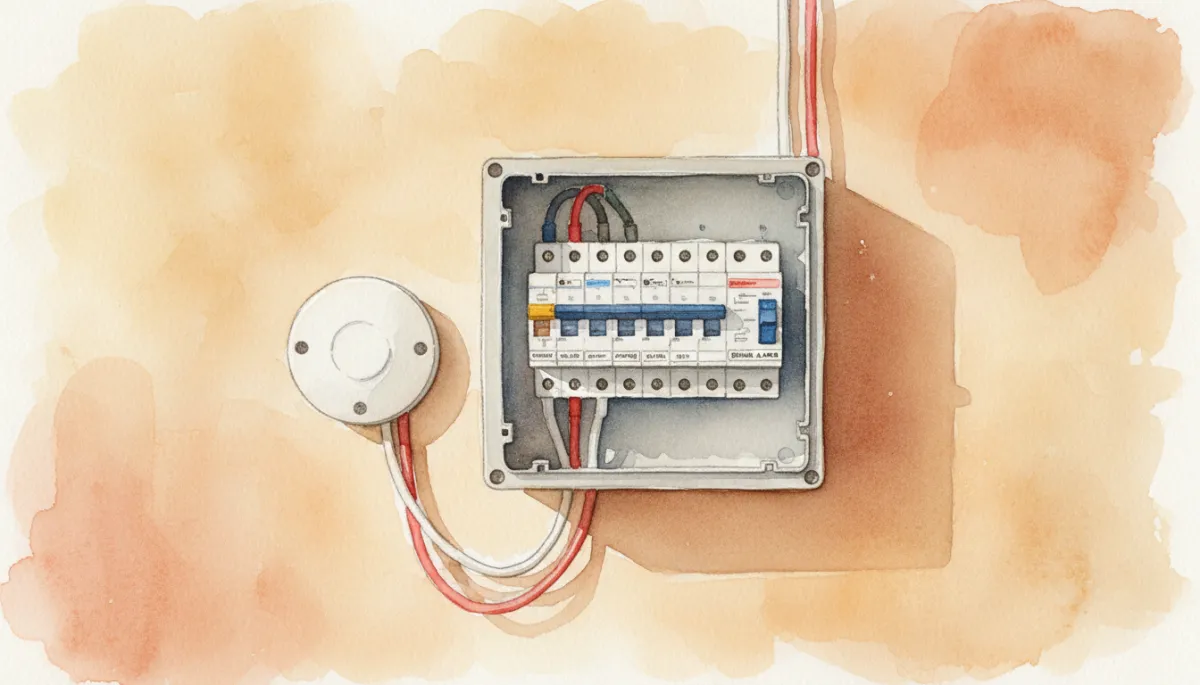
Hardwired networks cost more upfront but offer robust, interconnected fire protection.
Installation costs in 2026: what to budget
For battery-operated detectors, professional “supply and fit” packages in Cape Town typically include the device, ceiling mounting, basic positioning advice and testing. Allow around R400–R800 per detector supplied, plus R250–R450 per unit for professional mounting and commissioning, depending on height, access and quantity. Connected devices with monitoring or app integration may carry the monthly fees noted above.
For hardwired smoke alarm Cape Town installations, costs are more strongly influenced by wiring complexity. A small home with a basic network may fall near the R2,500 mark (supply, wiring and fit). Larger properties, or those requiring chasing into walls, extra detection zones or integration with existing security systems, can expect totals between R3,500 and R11,000, with premium, fully smart systems reaching R15,000 or more. Always obtain site‑specific quotations from PSIRA‑registered or SABS‑approved providers.
Airbnb compliance and body corporate rules in Cape Town
Airbnb’s global safety policy requires hosts to install and maintain working smoke detectors, test them regularly and accurately list them in the property description. Eligible Cape Town hosts may request a free battery-powered combination smoke and carbon monoxide alarm from Airbnb, but this does not replace local legal obligations.
The City of Cape Town expects all accommodation buildings to comply with national building and fire safety legislation and to ensure that any fire equipment is serviced by SABS-approved providers. For short‑term rentals, you must also respect zoning rules and, crucially, body corporate or HOA rules. Many blocks in the CBD, Sea Point and Blouberg now require owners to install certified smoke detectors, maintain fire extinguishers and provide proof of annual servicing as a condition for short‑term letting.
📌 Key takeaway: For any fire detector installation Cape Town Airbnb hosts should install alarms in every bedroom, passage and living area, keep maintenance records, and confirm that their body corporate rules and municipal approvals explicitly allow short‑term rentals.
