
Solar & Backup Power Costs in Cape Town 2026
Solar, Backup Power, Cape Town Costs 2026
Solar & Backup Power Installation Cost in Cape Town (2026 Guide)
Planning a solar or backup power system in Cape Town in 2026 means balancing resilience against load-shedding with a realistic budget. This guide explains current solar installation cost in Cape Town, inverter installation Cape Town requirements, and what to consider when choosing the right backup power Cape Town solution for your home or sectional title unit.
The three layers of home power systems
It helps to think of modern home energy in Cape Town as three layers, each adding more capability and cost:
Layer 1: Backup only (inverter or UPS) – Keeps essentials on during outages: lights, Wi‑Fi, a fridge, and a few plugs. Typically a 3 kW inverter with a 5 kWh battery, often without solar panels at first. Installed prices start from about R35,000–R57,000 for basic inverter–battery packages, and around R48,000–R80,000 for more integrated 3 kVA backup systems with wiring and compliance.
Layer 2: Hybrid solar + battery – Adds rooftop panels plus a hybrid inverter so you can charge batteries from the sun and reduce grid usage. A typical 5 kW hybrid system with battery and panels in Cape Town currently ranges from roughly R75,000–R145,000, depending on brands, battery size and site complexity.
Layer 3: Large or premium systems – Designed to run most of the home, including heavier loads such as multiple air-conditioners or large pools. Systems from 8 kW upwards generally cost R115,000 to well over R200,000, and premium 15 kVA installations can reach R243,500–R430,000 in high‑consumption or luxury properties.
Typical solar and backup pricing in Cape Town (2026)
Based on 2026 data from Energy Bee, DigiGo Solar, CapeClimate and others, the following ranges are a realistic starting point for solar installation cost Cape Town:
3 kW system with battery (good for smaller homes or focused backup): about R48,000–R80,000 including inverter, battery, panels, mounting, wiring and Certificate of Compliance (CoC).
5 kW hybrid system (standard family home): expect R75,000–R145,000, depending on whether you choose 5–10 kWh of storage and premium components.
8 kW+ systems (larger or high‑usage homes): typically R115,000–R235,000, with 10–15 kWh or more of battery storage.
For backup power Cape Town options that do not rely on solar, generator installations for an 8–12 kVA unit generally cost R12,000–R38,000 for the installation work alone, excluding the generator itself. However, most urban homeowners now favour inverter‑based or hybrid solar systems for quieter, cleaner operation and long‑term savings.
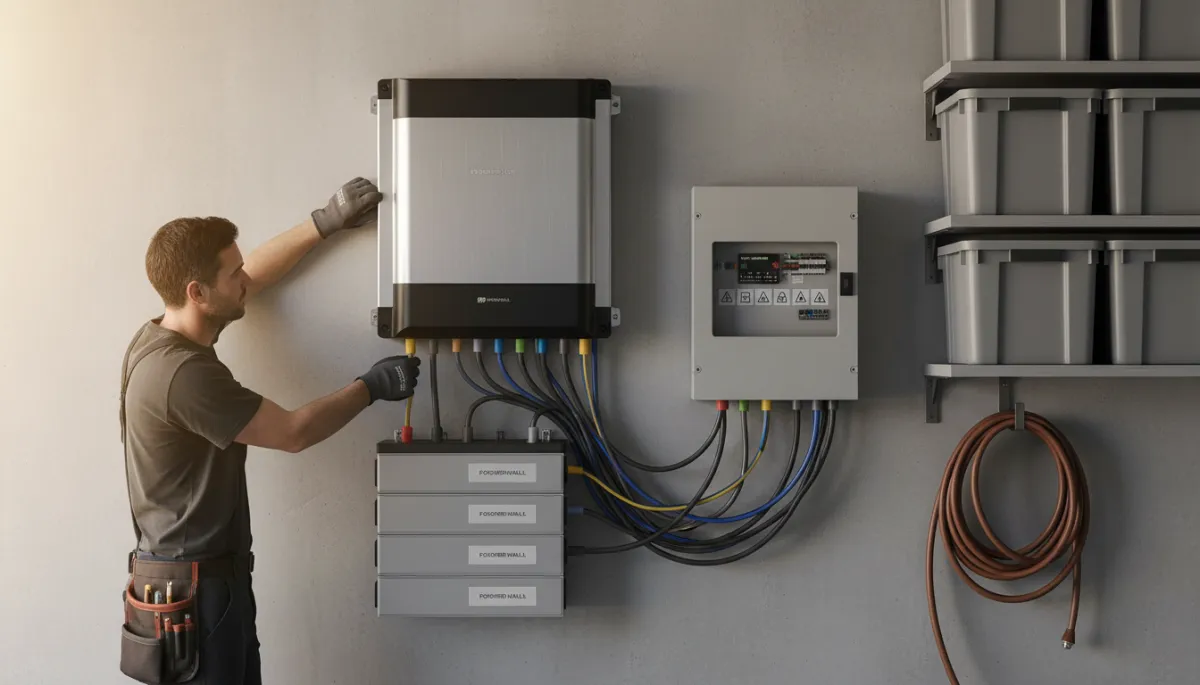
Quality inverter installation in Cape Town should always include compliance, labelling and tidy cable management.
What influences installation costs?
No two properties are identical, and reputable installers will adjust pricing once they have visited site. Key cost drivers include:
System size and battery capacity – Larger inverters, more panels and bigger batteries cost more, but benefit from economies of scale per kW. Batteries are a major line‑item: current estimates are roughly R7,000–R12,000 per usable kWh for lithium storage.
Equipment quality and brand – Tier‑one panels, premium hybrid inverters and long‑warranty batteries are more expensive upfront but often pay off in reliability and performance. Many installers now standardise on brands listed on the City of Cape Town’s approved inverter list.
Roof type and structure – A simple, single‑storey pitched tile roof is usually the most cost‑effective. Complex roofs, double‑storey properties, fragile slate, or flat roofs needing ballast frames and waterproofing detail all push labour and mounting costs up. In some cases, structural engineers’ sign‑off is required, adding professional fees.
Electrical upgrades – Older homes may need a new distribution board, earthing upgrades, surge protection, or rewiring of specific circuits to create an “essential loads” sub‑DB. These upgrades can add several thousand rand but are critical for safety and a clean inverter installation Cape Town inspectors will approve.
Regulatory compliance and paperwork – Proper Small‑Scale Embedded Generation (SSEG) applications, CoC, labelling and as‑built diagrams require time and expertise. Quotes that exclude these items may look cheaper but can leave you non‑compliant with the City of Cape Town’s regulations and void insurance.
Townhouses, flats and body corporate approval
If you live in a complex or block of flats, body corporate or homeowners’ association (HOA) approval can significantly shape your project. Many schemes now have formal solar and backup power policies covering:
Where panels may be mounted (shared roofs, carports or exclusive‑use areas).
Visual guidelines to maintain a uniform façade.
Noise and fumes restrictions that affect generator use.
Insurance and liability requirements for penetrations and structural loading.
Securing written body corporate approval early avoids delays and expensive design changes. In many sectional title settings, Layer 1 backup systems (inverter and battery only) are preferred because they can be installed inside the unit without altering common‑property roofs.
How to choose the right system for your needs
Selecting the correct solution is less about chasing the biggest system and more about matching capacity to your lifestyle and budget. A structured approach helps:
List your essential loads – Decide what absolutely must stay on during load‑shedding: usually Wi‑Fi, lighting, security systems, a fridge and a few plugs. For many households, this points to a 3–5 kW inverter with 5–10 kWh of storage as a sensible starting point.
Review your electricity bills – Average monthly kWh usage and peak demand help size your solar array. A typical medium home might suit a 5 kW hybrid system; larger or all‑electric homes may justify 8 kW or more.
Check roof orientation and shading – North‑facing roofs with minimal shading deliver the best return. If your roof is heavily shaded, it may be better to prioritise battery‑heavy backup over large solar capacity, or consider alternative mounting locations such as carports.
Set a realistic budget and phase the project – Many Cape Town homeowners start with Layer 1 (inverter + battery) to address immediate backup needs, then add solar panels later. Choosing a hybrid inverter upfront makes this transition straightforward and cost‑effective.
Insist on compliant design – Ensure your installer uses a City‑approved inverter model, includes SSEG registration where applicable, and provides a CoC. This protects you if there is an electrical fault, fire or insurance claim.
Final thoughts
With electricity tariffs in Cape Town having risen by around 12.7% in 2026 and average payback periods sitting at roughly 4.5 years for well‑designed systems, investing in solar and backup power is increasingly a financial as well as a lifestyle decision. By understanding the three layers of systems, the factors that influence pricing, and the role of roof type, electrical upgrades and body corporate approval, you can approach quotes with confidence and choose a solution that meets both your immediate resilience needs and long‑term energy goals.
